
Textbook Question
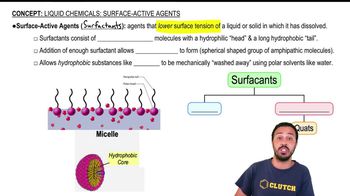
What bacteria have porins, are resistant to bisphenols, and survive and may grow in quats?
744
views

 Verified step by step guidance
 04:14
04:14
 01:46 01:46
What bacteria have porins, are resistant to bisphenols, and survive and may grow in quats?
You and your classmates are trying to determine how a disinfectant might kill cells. You observe that when you spill the disinfectant in a tube of reduced litmus milk, the litmus turns blue again. You suggest to your classmates that:
a. The disinfectant might inhibit cell wall synthesis
b. The disinfectant might oxidize molecules
c. The disinfectant might inhibit protein synthesis
d. The disinfectant might denature proteins
e. The disinfectant might damage DNA
A large hospital washes burn patients in a stainless steel tub. After each patient, the tub is cleaned with a quat. It was noticed that 14 of 20 burn patients acquired Pseudomonas infections after being bathed. Provide an explanation for this high rate of infection.
The use-dilution values for two disinfectants tested under the same conditions are as follows:
Disinfectant A—1:2
Disinfectant B—1:10,000.
If both disinfectants are designed for the same purpose, which would you select?