
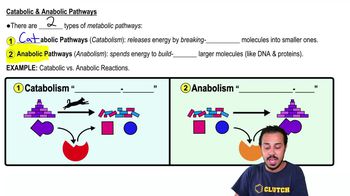
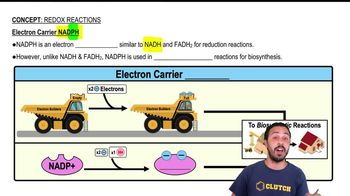
Use the following diagrams (a), (b), and (c) for the question. <IMAGE>
Name pathways diagrammed in parts (a), (b), and (c) of the figure. a. Show where glycerol is catabolized and where fatty acids are catabolized. b. Show where glutamic acid (an amino acid) is catabolized: <IMAGE> c. Show how these pathways are related. d. Where is ATP required in pathways (a) and (b)? e. Where is CO₂ released in pathways (b) and (c)? f. Show where a long-chain hydrocarbon such as petroleum is catabolized. g. Where is NADH (or FADH₂ or NADPH) used and produced in these pathways? h. Identify four places where anabolic and catabolic pathways are integrated.
Verified step by step guidance
1
Step 1: Identify the metabolic pathways shown in diagrams (a), (b), and (c). Typically, diagram (a) represents lipid metabolism (including glycerol and fatty acid catabolism), diagram (b) shows amino acid catabolism (such as glutamic acid), and diagram (c) illustrates the central metabolic pathways like the TCA cycle or glycolysis that connect these processes.
Step 2: Locate where glycerol and fatty acids are catabolized in diagram (a). Glycerol enters metabolism by conversion to glyceraldehyde-3-phosphate, feeding into glycolysis, while fatty acids undergo β-oxidation to produce acetyl-CoA, which enters the TCA cycle.
Step 3: Determine where glutamic acid is catabolized in diagram (b). Glutamic acid is typically deaminated to α-ketoglutarate, an intermediate of the TCA cycle, linking amino acid catabolism to central metabolism.
Step 4: Analyze how the pathways in (a), (b), and (c) are related. The key connection is through shared intermediates like acetyl-CoA and TCA cycle intermediates, which integrate lipid, amino acid, and carbohydrate metabolism.
Step 5: Identify where ATP is required in pathways (a) and (b), where CO₂ is released in (b) and (c), where long-chain hydrocarbons are catabolized (usually via β-oxidation or specialized pathways feeding into central metabolism), where NADH, FADH₂, or NADPH are produced or consumed, and pinpoint four sites where anabolic and catabolic pathways intersect, such as at key metabolic intermediates or cofactor usage.
Verified video answer for a similar problem:
This video solution was recommended by our tutors as helpful for the problem above
Video duration:
4m
Play a video:
0 Comments
Key Concepts
Here are the essential concepts you must grasp in order to answer the question correctly.
Catabolic Pathways of Lipids and Amino Acids
Catabolic pathways break down complex molecules like glycerol, fatty acids, and amino acids into simpler compounds to release energy. Glycerol enters glycolysis after conversion to glyceraldehyde-3-phosphate, while fatty acids undergo β-oxidation to form acetyl-CoA. Amino acids like glutamic acid are deaminated and converted into intermediates that enter the TCA cycle for further energy extraction.
Metabolic pathways are interconnected, allowing intermediates from catabolism to feed into anabolic processes and vice versa. ATP is consumed in energy-requiring steps, while NADH, FADH₂, and NADPH act as electron carriers, transferring energy within the cell. CO₂ release marks decarboxylation steps, often in the TCA cycle, linking carbon flow to energy production.
Electron carriers like NADH, FADH₂, and NADPH shuttle electrons during oxidation-reduction reactions, facilitating ATP generation via oxidative phosphorylation. ATP is both consumed in biosynthetic (anabolic) reactions and produced during catabolic breakdown. Understanding where these molecules are produced or used helps map energy balance and metabolic regulation.