Describe the symptoms of genital herpes. What is the causative agent? When is this infection least likely to be transmitted?
Verified step by step guidance
1
Identify the causative agent of genital herpes, which is a virus belonging to the Herpesviridae family, specifically Herpes Simplex Virus type 2 (HSV-2), and sometimes HSV-1 can also cause genital infections.
Describe the common symptoms of genital herpes, including painful blisters or sores on the genital or anal area, itching, burning sensations, and sometimes flu-like symptoms such as fever and swollen lymph nodes during the initial outbreak.
Explain that after the initial infection, the virus can become latent in nerve cells and may reactivate periodically, causing recurrent symptoms that are usually milder than the first episode.
Discuss the modes of transmission, emphasizing that genital herpes is primarily spread through direct skin-to-skin contact during sexual activity, especially when sores or blisters are present.
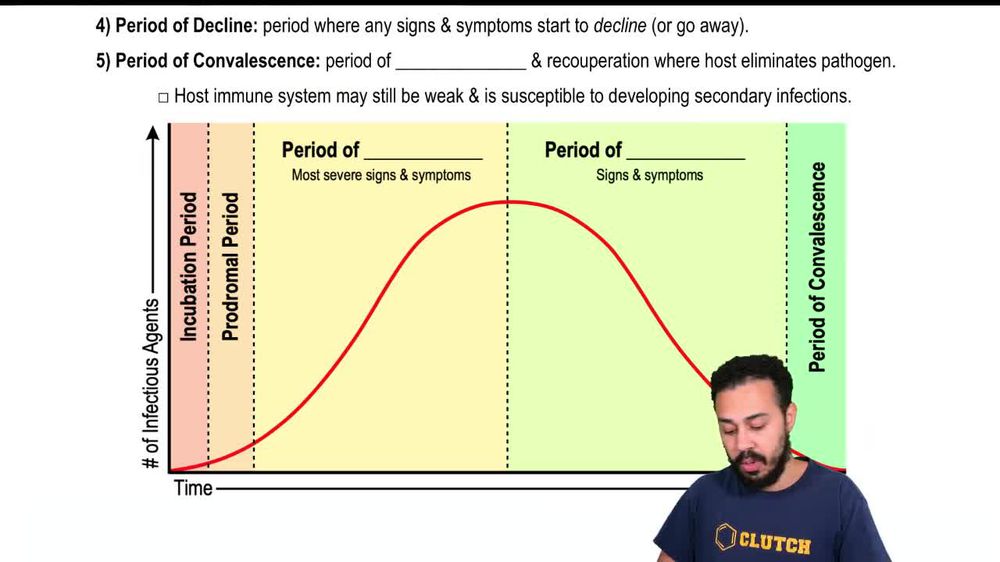
Clarify that the infection is least likely to be transmitted during asymptomatic periods when no visible sores or symptoms are present, although viral shedding can still occur, so transmission risk is reduced but not eliminated.
Verified video answer for a similar problem:
This video solution was recommended by our tutors as helpful for the problem above
Video duration:
1m
Play a video:
0 Comments
Key Concepts
Here are the essential concepts you must grasp in order to answer the question correctly.
Symptoms of Genital Herpes
Genital herpes typically presents with painful blisters or sores on the genital and anal areas. Other symptoms include itching, burning during urination, and flu-like signs such as fever and swollen lymph nodes. Symptoms can vary in severity and may recur periodically.
Genital herpes is caused by the herpes simplex virus (HSV), primarily HSV type 2, though HSV type 1 can also cause genital infections. HSV is a DNA virus that establishes latency in nerve cells, leading to recurrent outbreaks.
Genital herpes is most contagious during active outbreaks when sores are present. Transmission is least likely when the infected person is asymptomatic and has no visible lesions, although viral shedding can still occur. Safe sexual practices reduce transmission risk.