Why do pediatricians recommend that children under one year never be fed honey?
Verified step by step guidance
1
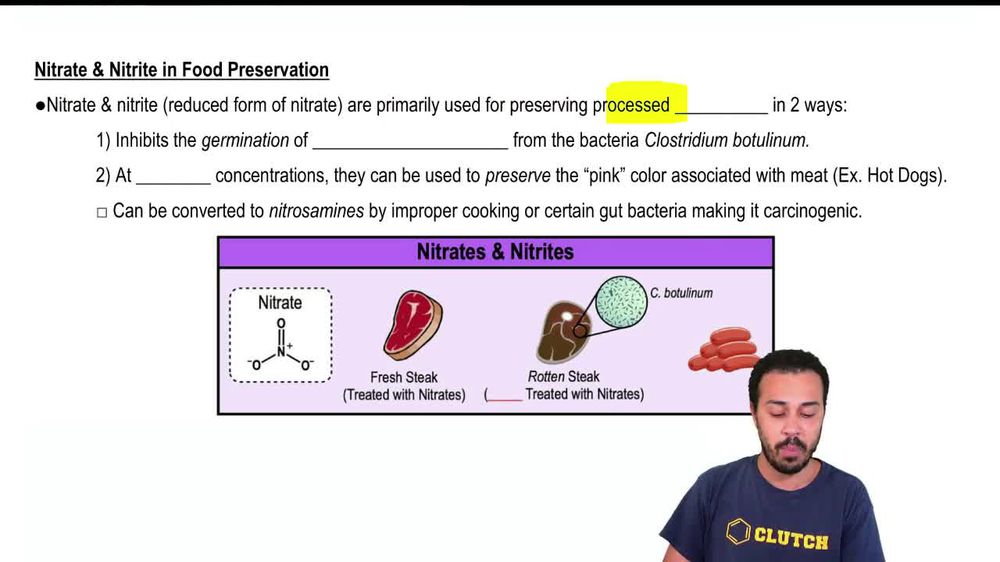
Understand that honey can contain spores of the bacterium Clostridium botulinum, which is harmless to older children and adults due to their mature digestive systems and gut flora.
Recognize that infants under one year have an immature digestive system and a less developed gut microbiome, which makes them more susceptible to colonization by Clostridium botulinum spores.
Learn that when these spores germinate in the infant's intestines, they can produce botulinum toxin, leading to infant botulism, a serious and potentially fatal illness characterized by muscle weakness and respiratory problems.
Note that because of this risk, pediatricians recommend avoiding feeding honey to children under one year to prevent exposure to these spores.
Summarize that the key reason is the prevention of infant botulism caused by Clostridium botulinum spores present in honey, which infants cannot safely handle due to their immature digestive defenses.
Verified video answer for a similar problem:
This video solution was recommended by our tutors as helpful for the problem above
Video duration:
1m
Play a video:
0 Comments
Key Concepts
Here are the essential concepts you must grasp in order to answer the question correctly.
Botulism and Clostridium botulinum Spores
Honey can contain spores of Clostridium botulinum, a bacterium that produces botulinum toxin. In infants under one year, these spores can germinate in the immature gut, leading to infant botulism, a serious paralytic illness.
Infant Gut Microbiota and Immune System Development
The digestive and immune systems of infants under one year are not fully developed, making them more susceptible to infections. Their gut lacks the mature microbiota that inhibits harmful bacteria like C. botulinum from colonizing.
Infant botulism can cause muscle weakness, poor feeding, constipation, and respiratory difficulties. Early exposure to honey increases the risk, so pediatricians advise avoiding honey to prevent this potentially life-threatening condition.