Explain the different actions of pyogenic and pyrogenic toxins.
Verified step by step guidance
1
Step 1: Define pyogenic toxins by explaining that these toxins stimulate the production of pus by attracting and activating neutrophils, which are white blood cells involved in the inflammatory response.
Step 2: Describe how pyogenic toxins contribute to the formation of abscesses and localized infections by promoting the accumulation of neutrophils and dead cells at the infection site.
Step 3: Define pyrogenic toxins as toxins that induce fever by acting on the hypothalamus, the part of the brain that regulates body temperature.
Step 4: Explain that pyrogenic toxins trigger the release of endogenous pyrogens such as interleukin-1 (IL-1) and tumor necrosis factor (TNF), which then cause the hypothalamus to raise the body's temperature set point, resulting in fever.
Step 5: Summarize the key difference by stating that pyogenic toxins primarily cause pus formation and localized inflammation, while pyrogenic toxins primarily cause systemic effects like fever.
Verified video answer for a similar problem:
This video solution was recommended by our tutors as helpful for the problem above
Video duration:
2m
Play a video:
0 Comments
Key Concepts
Here are the essential concepts you must grasp in order to answer the question correctly.
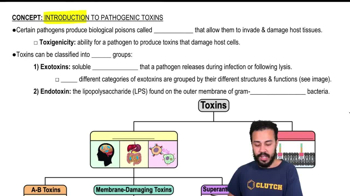
Pyogenic Toxins
Pyogenic toxins are bacterial toxins that stimulate the production of pus by attracting and activating neutrophils at the site of infection. These toxins often cause localized inflammation and tissue damage, leading to abscess formation. They are commonly produced by bacteria like Staphylococcus aureus.
Pyrogenic toxins are bacterial exotoxins that induce fever by triggering the release of endogenous pyrogens such as interleukin-1 and tumor necrosis factor from immune cells. These toxins can cause systemic effects like fever and rash, as seen in diseases like scarlet fever caused by Streptococcus pyogenes.
Both pyogenic and pyrogenic toxins activate the immune system but through different pathways: pyogenic toxins recruit neutrophils causing pus formation, while pyrogenic toxins act as superantigens or stimulate cytokine release leading to fever. Understanding these mechanisms explains their distinct clinical manifestations.