 Back
BackMicrobiology: Antimicrobial Agents and Microbial Control
 07:36
07:36
Terms in this set (20)
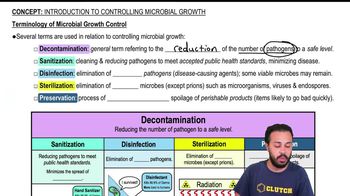
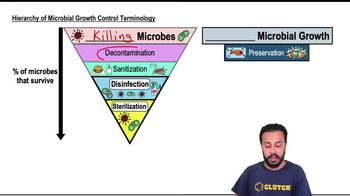
Sterilization is the process of destroying all forms of microbial life, including spores, on a surface or in a substance.
Disinfection is the process of eliminating or reducing harmful microorganisms from inanimate objects, but it may not kill spores.
Degerming is the mechanical removal of microbes from a limited area, such as skin around an injection site.
Sanitization reduces microbial numbers on eating utensils or surfaces to safe public health levels.
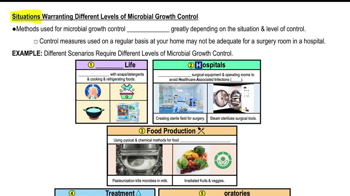
Pasteurization is a mild heat treatment to reduce pathogens and spoilage organisms, originally to make milk safe for consumption.
-static agents inhibit microbial growth, while -cidal agents kill microbes.
Targets include the cell wall, cell membrane, proteins, and nucleic acids.
Some agents can damage human cells by affecting similar structures or cause allergic reactions or toxicity.
Factors like temperature, pH, and presence of organic matter can increase or decrease antimicrobial activity.
Longer exposure generally increases microbial kill rates and effectiveness of the agent.
BSLs are classifications of lab safety practices from 1 to 4, increasing with the risk of the microbes handled.
Moist heat (autoclave) is preferred for sterilizing heat-resistant materials quickly; dry heat is used for materials damaged by moisture.
Used to reduce pathogens in milk, juices, and other beverages while preserving flavor and nutrients.
Refrigeration slows growth but does not kill microbes; some psychrophiles can grow at low temperatures.
Filters remove microbes physically but cannot remove viruses or toxins effectively.
Includes alcohols, aldehydes, phenolics, halogens, oxidizing agents, surfactants, heavy metals, gases, and enzymes.
Enzymes can degrade prions on medical instruments, which are resistant to standard sterilization.
Includes phenol coefficient, use-dilution test, disk-diffusion method, and in-use test.
Microbes metabolize sugars anaerobically, producing alcohol as a byproduct of fermentation.
Oxygen can be essential, toxic, or neutral depending on bacterial type (aerobes, anaerobes, facultative anaerobes).