Why is eukaryotic reproduction more complex than prokaryotic reproduction?
Eukaryotic reproduction involves mitosis or meiosis with multiple chromosomes and organelles, while prokaryotes reproduce mainly by binary fission, a simpler process without a nucleus.
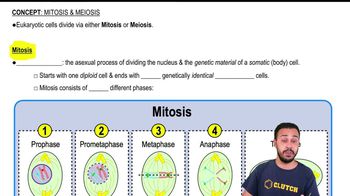
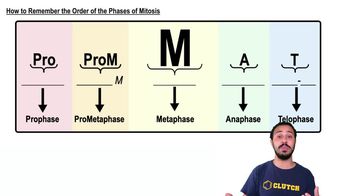
Contrast mitosis with meiosis.
Mitosis produces two identical diploid cells for growth or repair; meiosis produces four genetically diverse haploid cells for sexual reproduction.
Differentiate between nuclear division, cytokinesis, and schizogony.
Nuclear division is the division of the nucleus; cytokinesis divides the cytoplasm; schizogony is multiple nuclear divisions before cytoplasmic division, producing many daughter cells.
How has the classification of major eukaryotic groups changed from past to present?
Past classification was based on morphology; present classification uses molecular data, leading to redefined groups and recognition of new clades.
Name three characteristics shared by all protozoa.
Protozoa are unicellular, eukaryotic, and heterotrophic organisms that often move using cilia, flagella, or pseudopods.
Why are there many different taxonomic schemes for protozoa?
Protozoa are diverse in form, life cycles, and genetics, making classification complex and leading to multiple schemes based on different criteria.
What features distinguish fungi from other eukaryotes?
Fungi have chitin in their cell walls, absorb nutrients by external digestion, and reproduce via spores.
Compare the three divisions of fungi based on sexual spore formation.
Zygomycota form zygospores, Ascomycota form ascospores in sacs, and Basidiomycota form basidiospores on club-shaped structures.
What are the distinguishing characteristics of the four groups of algae?
Groups differ by pigment types, cell wall composition, storage products, and habitat; examples include green, red, brown algae, and diatoms.
How do water molds differ from true fungi?
Water molds have cellulose in their cell walls and produce motile spores, unlike true fungi which have chitin walls and non-motile spores.
Why do microbiologists study large organisms such as parasitic worms?
Because parasitic worms cause diseases and have microbial life stages important for understanding infection and control.
What are the distinctive features of various groups of arthropod vectors?
Arthropod vectors differ in morphology, feeding habits, and the pathogens they transmit, including mosquitoes, ticks, and fleas.
Name common diseases transmitted by arthropod vectors.
Malaria, Lyme disease, dengue fever, and plague are examples of diseases spread by arthropod vectors.
How does UV light slow or eliminate bacterial growth?
UV light damages bacterial DNA, causing mutations that inhibit replication and can kill the cells.
 Back
Back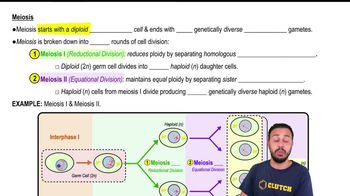
 05:17
05:17