 Back
BackMicrobiology: Human Body Defense Mechanisms
 05:52
05:52
Terms in this set (17)
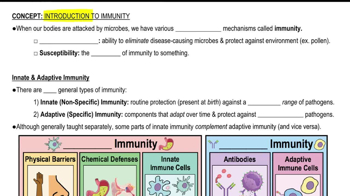
The first line is physical and chemical barriers; the second line is innate immune responses like phagocytosis and inflammation; the third line is adaptive immunity involving specific responses by lymphocytes.
Species resistance is the natural immunity a species has against certain pathogens that do not infect it due to physiological differences.
Innate immunity is the nonspecific defense present at birth protecting against all pathogens, while species resistance is immunity due to species-specific traits.
The skin acts as a physical barrier with tightly packed cells, a dry surface, and acidic pH, plus antimicrobial secretions that inhibit pathogen growth.
Mucous membranes trap pathogens with mucus, contain antimicrobial enzymes, and have cilia that move trapped microbes out of the respiratory tract.
The lacrimal apparatus produces tears that wash away microbes and contain lysozyme, an enzyme that destroys bacterial cell walls.
The microbiome competes with pathogens for nutrients and space, produces antimicrobial substances, and stimulates the immune system.
Antimicrobial peptides are small proteins that disrupt microbial membranes, providing a rapid defense against bacteria, fungi, and viruses.
The first line includes physical and chemical barriers preventing entry; the second line involves internal cellular defenses like phagocytes, inflammation, and fever.
Blood contains white blood cells (leukocytes) like neutrophils and macrophages for defense, platelets for clotting, and plasma with antibodies and complement proteins.
1. Chemotaxis, 2. Adherence, 3. Ingestion, 4. Formation of phagosome, 5. Fusion with lysosome, 6. Digestion and exocytosis of debris.
TLRs on immune cells recognize PAMPs, molecular structures unique to pathogens, triggering immune responses.
Interferons inhibit viral replication and activate immune cells; the complement system enhances phagocytosis, inflammation, and lyses pathogens.
Inflammation involves vasodilation, increased permeability, and leukocyte migration to isolate and destroy pathogens and promote tissue repair.
Fever raises body temperature to inhibit pathogen growth and enhances immune cell activity.
Biochemical media test for bacterial enzyme activities and metabolic traits, helping differentiate species based on their biochemical reactions.
Differential tests distinguish bacteria by observable changes like color shifts or gas production in specific media.