 Back
BackMicrobiology: Infectious Disease and Symbiosis Review
 05:59
05:59
Terms in this set (15)
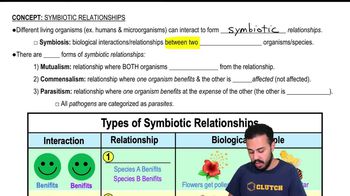
Mutualism is a symbiotic relationship where both organisms benefit.
Symptoms are subjective effects of disease experienced by the patient, such as pain or fatigue.
When the host's immune system is weakened, normal microbiota can cause disease as opportunistic pathogens.
The illness and decline stages are typically the most severe phases of infectious disease.
Vehicle transmission occurs via a medium like water, food, or air; for example, contaminated water spreading cholera.
Signs are objective evidence of disease observed by others, such as fever or rash.
The most likely mode was vehicle transmission through contaminated water.
Koch's postulates demonstrated the relationship between a specific microorganism and a disease.
The sequence is: incubation period, prodromal period, illness, decline, and convalescence.
Cold viruses are commonly transmitted by contact transmission, especially via hands.
A pathogen is a microorganism that causes disease in a host.
Measures include vaccination, quarantine, hand hygiene, and public education.
Commensalism is a symbiotic relationship where one organism benefits and the other is neither helped nor harmed.
Parasitism is a relationship where one organism benefits at the expense of the other.
A reservoir is a natural habitat where a pathogen normally lives and multiplies.