 Back
BackMicrobiology: Microbial Characteristics and Cell Structure
 04:39
04:39
Terms in this set (20)
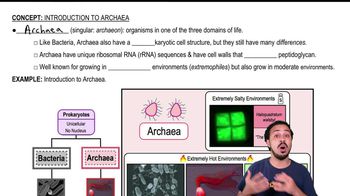
The three domains are Archaea, Bacteria, and Eukarya.
Archaea lack peptidoglycan and may have pseudomurein, while bacteria have peptidoglycan cell walls.
Bacillus are rod-shaped bacteria; arrangements include single rods, chains (streptobacilli), or pairs (diplobacilli).
Peptidoglycan is a polymer of repeating disaccharides (NAG and NAM) linked by polypeptide cross-bridges forming a lattice that surrounds the cell.
Teichoic acids regulate cation movement, provide negative charge, and contribute to antigenic specificity.
It contains lipopolysaccharide (LPS), lipoproteins, and phospholipids; LPS includes O polysaccharide antigen and lipid A endotoxin.
Gram-positive retain crystal violet-iodine due to thick peptidoglycan; Gram-negative lose it due to alcohol dissolving outer membrane and are counterstained pink by safranin.
Capsules are organized, firmly attached polysaccharide layers that prevent phagocytosis; slime layers are loose, unorganized and help prevent dehydration and aid adhesion.
Flagella have three parts: filament (protein flagellin), hook, and basal body; they enable motility by rotating to run or tumble.
Axial filaments are internal flagella found in spirochetes; their rotation causes corkscrew movement.
Fimbriae are short, rigid appendages for attachment; pili are longer, involved in motility and DNA transfer (conjugation).
The nucleoid is a circular, double-stranded DNA region containing the cell's genetic material, not enclosed by a membrane.
Plasmids are small extrachromosomal DNA circles carrying nonessential genes like antibiotic resistance; they replicate independently and can transfer between cells.
Prokaryotes have one circular chromosome without a nuclear membrane; eukaryotes have linear chromosomes enclosed in a nuclear membrane.
Peptidoglycan provides structural support, prevents osmotic lysis, and is a target for antibiotics like penicillin.
Penicillin inhibits formation of peptide cross-bridges in peptidoglycan, weakening the cell wall and making bacteria susceptible to lysis.
Protoplasts are wall-less Gram-positive cells; spheroplasts are wall-less Gram-negative cells; L forms are wall-less cells with irregular shapes.
The membrane is a phospholipid bilayer with proteins that move freely, allowing selective permeability and membrane functions.
Simple diffusion moves molecules down concentration gradient without energy; facilitated diffusion uses membrane proteins to transport molecules down the gradient.
Osmosis is water movement across membranes; isotonic solutions cause no net water movement, hypotonic solutions cause water influx, hypertonic cause water efflux.