 Back
BackPrinciples of Disease and Epidemiology - Microbiology
 04:16
04:16
Terms in this set (20)
Pathology is the study of disease.
Etiology is the study of the cause of a disease.
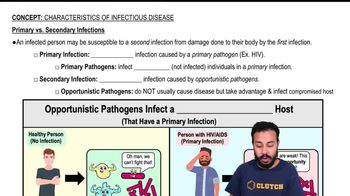
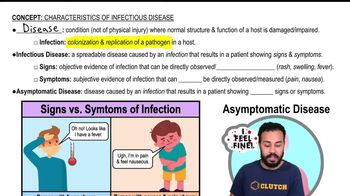
Infection is the colonization of the body by pathogens.
Disease is an abnormal state in which the body is not functioning normally.
Normal microbiota permanently colonize the host, while transient microbiota may be present for days, weeks, or months.
Commensalism: one benefits, other unaffected.
Mutualism: both benefit.
Parasitism: one benefits at the expense of the other.
Microbial antagonism is competition between microbes, where normal microbiota protect the host by occupying niches, producing acids, and bacteriocins.
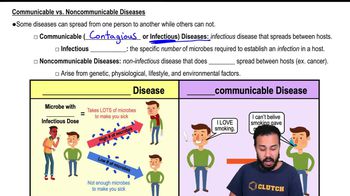
Communicable disease spreads from one host to another.
Noncommunicable disease is not transmitted between hosts.
Herd immunity is immunity in most of a population, reducing disease spread.
Incubation period, prodromal period, period of illness, period of decline, period of convalescence.
Reservoirs are continual sources of infection: human (AIDS), animal (rabies), and nonliving (soil with tetanus).
Mechanical transmission: pathogen carried on vector's feet.
Biological transmission: pathogen reproduces in vector.
HAIs are infections acquired during hospital stays, affecting 5–15% of patients.
Short urethra in females, inherited traits, climate, fatigue, age, lifestyle, chemotherapy.
Morbidity is the incidence of disease.
Mortality is the number of deaths from disease.
Acute: rapid symptoms.
Chronic: slow development.
Subacute: between acute and chronic.
Latent: no symptoms during inactive phase.
Endemic: constantly present.
Epidemic: many cases in short time.
Pandemic: worldwide epidemic.
Sporadic: occasional cases.
Septicemia is the growth of bacteria in the blood.
The CDC collects and analyzes data, conducts epidemiologic investigations, and helps control disease spread.
Infectious agent, reservoir, mode of transmission, route of entry/exit, susceptible host.