Ch. 1 - A Brief History of Microbiology
Bauman - Microbiology with Diseases by Taxonomy 6th Edition
Bauman6th EditionMicrobiology with Diseases by TaxonomyISBN: 9780134832302Not the one you use?Change textbook
Chapter 1, Problem 2

Fill in the blanks with the name(s) of the scientist(s) whose investigations led to the following fields of study in microbiology.
Biochemistry _________ and __________.       

Verified step by step guidance
1
Step 1: Understand that the question asks for the names of scientists whose work contributed to the field of biochemistry within microbiology.
Step 2: Recall that biochemistry in microbiology involves studying the chemical processes and substances that occur within microorganisms.
Step 3: Identify key scientists known for foundational work in biochemistry, such as Eduard Buchner, who demonstrated cell-free fermentation, and James Sumner, who crystallized enzymes, showing their protein nature.
Step 4: Consider other notable contributors like Hans Krebs, known for the Krebs cycle, which is fundamental to microbial metabolism.
Step 5: Select the two most relevant scientists whose investigations directly led to the development of biochemistry as a field in microbiology, typically Eduard Buchner and James Sumner.

Verified video answer for a similar problem:

This video solution was recommended by our tutors as helpful for the problem above.
Video duration:
2m
Was this helpful?

Key Concepts

Here are the essential concepts you must grasp in order to answer the question correctly.

Biochemistry in Microbiology

Biochemistry studies the chemical processes within and related to living organisms. In microbiology, it helps explain how microbes metabolize nutrients, produce energy, and synthesize cellular components, forming the basis for understanding microbial physiology and genetics.
Recommended video:
Guided course
07:27
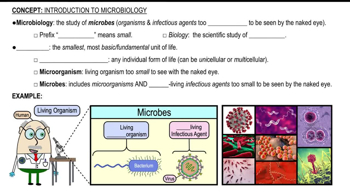
Introduction to Microbiology

Role of Eduard Buchner

Eduard Buchner demonstrated that cell-free yeast extracts could ferment sugar, proving that enzymes drive biochemical reactions outside living cells. His work founded enzymology and showed that biochemical processes are not solely dependent on intact cells.
Recommended video:
Guided course
01:25
Importance of Microorganisms

Contributions of Louis Pasteur

Louis Pasteur's investigations into fermentation and microbial life established the link between microbes and biochemical processes. He disproved spontaneous generation and developed pasteurization, laying groundwork for microbiology and biochemistry by connecting microbes to chemical transformations.
Recommended video:
Guided course
03:53
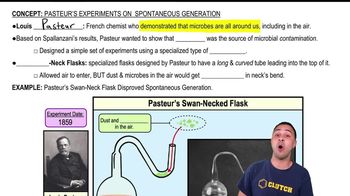
Pasteur's Experiments on Spontaneous Generation