


Ch. 10 - Controlling Microbial Growth in the Body: Antimicrobial Drugs
Bauman - Microbiology with Diseases by Taxonomy 6th Edition
Bauman6th EditionMicrobiology with Diseases by TaxonomyISBN: 9780134832302Not the one you use?Change textbook
Chapter 10, Problem 8

A man has been given a broad-spectrum antibiotic for his stomach ulcer. What unintended consequences could arise from this therapy?

Verified step by step guidance
1
Understand that broad-spectrum antibiotics target a wide range of bacteria, including both harmful pathogens and beneficial normal flora in the body.
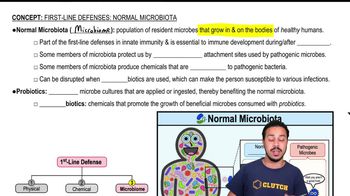
Recognize that the stomach and intestines normally contain a diverse community of beneficial bacteria that aid in digestion, nutrient absorption, and protection against harmful microbes.
Consider that the use of broad-spectrum antibiotics can disrupt this normal microbial balance, leading to a reduction in beneficial bacteria populations.
Identify potential unintended consequences such as overgrowth of opportunistic pathogens (e.g., Clostridioides difficile), which can cause antibiotic-associated diarrhea or colitis.
Acknowledge that disruption of normal flora may also impair digestion and immune function, and could contribute to the development of antibiotic resistance.

Verified video answer for a similar problem:

This video solution was recommended by our tutors as helpful for the problem above.
Video duration:
2m
Was this helpful?

Key Concepts

Here are the essential concepts you must grasp in order to answer the question correctly.

Broad-Spectrum Antibiotics

Broad-spectrum antibiotics target a wide range of bacteria, including both harmful pathogens and beneficial normal flora. While effective against diverse infections, their use can disrupt the balance of microbial communities in the body, leading to unintended effects.
Recommended video:
Guided course
04:29
Electromagnetic Spectrum

Normal Gut Microbiota and Its Role

The gut microbiota consists of beneficial bacteria that aid digestion, synthesize vitamins, and protect against harmful microbes. Disruption of this community by antibiotics can impair these functions and allow opportunistic pathogens to overgrow.
Recommended video:
Guided course
03:43
Normal Microbiota

Antibiotic-Associated Side Effects and Resistance

Use of broad-spectrum antibiotics can lead to side effects such as diarrhea, yeast infections, and Clostridioides difficile overgrowth. Additionally, improper use promotes antibiotic resistance, making future infections harder to treat.
Recommended video:
Guided course
03:18
2) Cell Lysis of Invading Microbes