Ch. 12 - Characterizing and Classifying Eukaryotes
Bauman - Microbiology with Diseases by Taxonomy 6th Edition
Bauman6th EditionMicrobiology with Diseases by TaxonomyISBN: 9780134832302Not the one you use?Change textbook
Chapter 12, Problem 7

A phycologist studies which of the following?
a. Classification of eukaryotes
b. Alternation of generations in algae
c. Rusts, smuts, and yeasts
d. Parasitic worms

Verified step by step guidance
1
Step 1: Understand the term 'phycologist'. A phycologist is a scientist who specializes in the study of algae.
Step 2: Review each option to see which relates to algae: (a) classification of eukaryotes is broad and not specific to algae, (b) alternation of generations in algae directly involves algae life cycles, (c) rusts, smuts, and yeasts are fungi, and (d) parasitic worms are animals.
Step 3: Recognize that alternation of generations is a biological process where an organism alternates between haploid and diploid stages, commonly studied in algae and plants.
Step 4: Conclude that the correct focus of a phycologist is the study of algae, including their life cycles such as alternation of generations.
Step 5: Therefore, the best answer is the option related to algae, which is alternation of generations in algae.

Verified video answer for a similar problem:

This video solution was recommended by our tutors as helpful for the problem above.
Video duration:
2m
Was this helpful?

Key Concepts

Here are the essential concepts you must grasp in order to answer the question correctly.

Phycology

Phycology is the branch of biology that studies algae, including their classification, physiology, and ecological roles. It focuses on various types of algae, from microscopic forms to large seaweeds.

Alternation of Generations in Algae

This concept describes the life cycle in algae involving alternating haploid (gametophyte) and diploid (sporophyte) stages. Understanding this helps explain reproduction and development in many algal species.
Recommended video:
Guided course
02:54
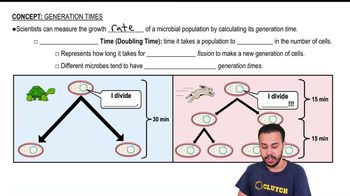
Generation Times

Classification of Organisms

Classification involves grouping organisms based on shared characteristics. In microbiology, it helps differentiate between groups like eukaryotes, fungi (rusts, smuts, yeasts), and parasitic worms, clarifying their biological relationships.
Recommended video:
Guided course
05:22
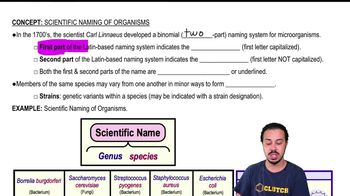
Scientific Naming of Organisms