Ch. 15 - Innate Immunity
Bauman - Microbiology with Diseases by Taxonomy 6th Edition
Bauman6th EditionMicrobiology with Diseases by TaxonomyISBN: 9780134832302Not the one you use?Change textbook
Chapter 15, Problem 12

Indicate which statements are true. Correct all false statements by changing the underlined words.
__________ Acute and chronic inflammation exhibit similar signs and symptoms.

Verified step by step guidance
1
Step 1: Understand the definitions of acute and chronic inflammation. Acute inflammation is a rapid, short-term response to injury or infection, characterized by classic signs such as redness, heat, swelling, pain, and loss of function. Chronic inflammation is a prolonged, often low-grade response that can last weeks to years and may not show the classic acute signs clearly.
Step 2: Analyze the statement: 'Acute and chronic inflammation exhibit similar signs and symptoms.' Consider whether the signs and symptoms of both types of inflammation are indeed similar or if they differ in presentation and duration.
Step 3: Recognize that acute inflammation typically shows the classic signs (redness, heat, swelling, pain, loss of function), while chronic inflammation may have less obvious or different symptoms, such as tissue destruction and fibrosis, rather than the classic acute signs.
Step 4: Conclude that the statement is false because acute and chronic inflammation do not exhibit similar signs and symptoms. The underlined words 'similar signs and symptoms' should be corrected to 'different signs and symptoms' to accurately reflect the distinction.
Step 5: Summarize the corrected statement: 'Acute and chronic inflammation exhibit different signs and symptoms.' This highlights the key difference in their clinical presentations.

Verified video answer for a similar problem:

This video solution was recommended by our tutors as helpful for the problem above.
Video duration:
2m
Was this helpful?

Key Concepts

Here are the essential concepts you must grasp in order to answer the question correctly.

Acute Inflammation

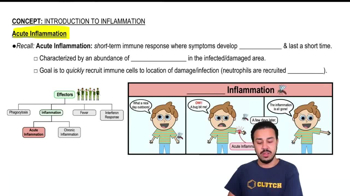
Acute inflammation is the body's immediate and early response to injury or infection, characterized by redness, heat, swelling, pain, and loss of function. It typically lasts a short duration, from minutes to a few days, and aims to eliminate the cause of injury and initiate healing.
Recommended video:
Guided course
01:56
Acute Inflammation

Chronic Inflammation

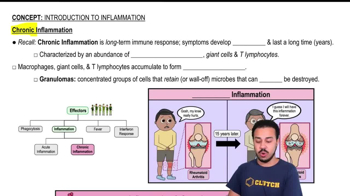
Chronic inflammation is a prolonged inflammatory response that can last weeks, months, or years. It often results from persistent infections, autoimmune reactions, or long-term exposure to irritants, and may lead to tissue damage and fibrosis, differing in symptoms and progression from acute inflammation.
Recommended video:
Guided course
03:09
Chronic Inflammation

Differences in Signs and Symptoms Between Acute and Chronic Inflammation

While acute inflammation shows classic signs like redness, heat, swelling, and pain, chronic inflammation may have less obvious or systemic symptoms such as fatigue and low-grade fever. Understanding these differences is essential to correctly identify and treat each type.
Recommended video:
Guided course
03:09
Chronic Inflammation