
Ch. 15 - Innate Immunity
Bauman - Microbiology with Diseases by Taxonomy 6th Edition
Bauman6th EditionMicrobiology with Diseases by TaxonomyISBN: 9780134832302Not the one you use?Change textbook
Chapter 15, Problem 1a

Which line of defense first applies to each term?
1. ___ Inflammation
2. ___ Monocytes
3. ___ Lactoferrin
4. ___ Fever
5. ___ Dendritic cells
6. ___ Alpha interferon
7. ___ Mucous membrane of the digestive tract
8. ___ Neutrophils
9. ___ Epidermis
10. ___ Lysozyme
11. ___ Goblet cells
12. ___ Phagocytes
13. ___ Sebum
14. ___ T lymphocytes
15. ___ Antimicrobial peptides


A. First line of defense
B. Second line of defense
C. Third line of defense

Verified step by step guidance
1
Step 1: Understand the three lines of defense in the immune system. The first line of defense includes physical and chemical barriers that prevent pathogen entry, such as skin, mucous membranes, and secretions. The second line of defense involves nonspecific immune responses like inflammation, phagocytes, and fever. The third line of defense is the specific immune response involving lymphocytes and antibodies.
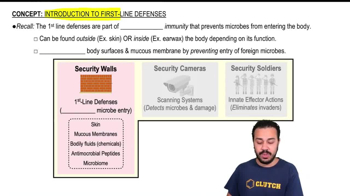
Step 2: Identify terms related to physical or chemical barriers (first line). These include structures or substances that block or neutralize pathogens before they enter the body tissues, such as the epidermis, mucous membranes, sebum, lysozyme, goblet cells, and antimicrobial peptides.
Step 3: Identify terms related to nonspecific immune responses (second line). These are cellular and molecular responses activated after pathogens bypass the first line, including inflammation, monocytes, neutrophils, dendritic cells, fever, and alpha interferon.
Step 4: Identify terms related to specific immune responses (third line). These involve adaptive immunity components like T lymphocytes that recognize specific antigens and provide targeted defense.
Step 5: Assign each term to the appropriate line of defense based on its role: first line (A), second line (B), or third line (C). For example, inflammation is a second line defense, while T lymphocytes belong to the third line.

Verified video answer for a similar problem:

This video solution was recommended by our tutors as helpful for the problem above.
Video duration:
3m
Was this helpful?

Key Concepts

Here are the essential concepts you must grasp in order to answer the question correctly.

Lines of Defense in the Immune System

The immune system protects the body through three lines of defense: the first line includes physical and chemical barriers like skin and mucous membranes; the second line involves innate immune responses such as inflammation and phagocytes; the third line is the adaptive immune response, featuring specific cells like T lymphocytes that target pathogens precisely.
Recommended video:
Guided course
01:51
Introduction to First-Line Defenses

Innate Immunity Components

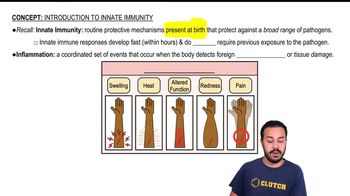
Innate immunity provides immediate, non-specific defense against pathogens. It includes physical barriers (e.g., epidermis, mucous membranes), chemical factors (e.g., lysozyme, lactoferrin), and cellular responses (e.g., neutrophils, monocytes, dendritic cells) that recognize and attack invaders without prior exposure.
Recommended video:
Guided course
02:30
Introduction to Innate Immunity

Adaptive Immunity and Specific Immune Cells

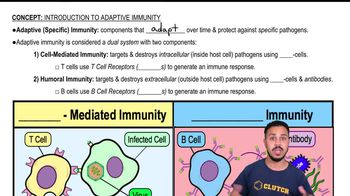
Adaptive immunity is a specific defense mechanism activated after exposure to a pathogen. It involves lymphocytes such as T cells and B cells, which recognize specific antigens and provide long-lasting immunity through memory cells, enabling a stronger response upon re-infection.
Recommended video:
Guided course
05:47
Introduction to Adaptive Immunity