Ch. 17 - Immunization and Immune Testing
Bauman - Microbiology with Diseases by Taxonomy 6th Edition
Bauman6th EditionMicrobiology with Diseases by TaxonomyISBN: 9780134832302Not the one you use?Change textbook
Chapter 17, Problem 5

An anti-antibody is used when:
a. An antigen is not precipitating
b. An antibody is not agglutinating
c. An antibody does not activate complement
d. The antigen is an antibody

Verified step by step guidance
1
Understand the concept of an anti-antibody: it is an antibody that specifically binds to other antibodies, often used in immunological assays to detect or measure antibodies.
Analyze each option to see when an anti-antibody would be necessary:
Option a: 'An antigen is not precipitating' — this relates to antigen-antibody precipitation, which does not directly involve anti-antibodies.
Option b: 'An antibody is not agglutinating' — agglutination involves antibodies causing clumping of antigens, but anti-antibodies are not typically used to induce agglutination in this context.
Option d: 'The antigen is an antibody' — since anti-antibodies bind to antibodies, they are used when the target antigen itself is an antibody, making this the correct context for using an anti-antibody.

Verified video answer for a similar problem:

This video solution was recommended by our tutors as helpful for the problem above.
Video duration:
3m
Was this helpful?

Key Concepts

Here are the essential concepts you must grasp in order to answer the question correctly.

Antibody and Antigen Interaction

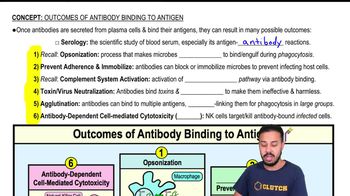
Antibodies are proteins produced by the immune system that specifically bind to antigens, which are foreign molecules. This binding can lead to visible reactions such as precipitation or agglutination, which are used in diagnostic tests to detect the presence of antigens or antibodies.
Recommended video:
Guided course
09:16
Outcomes of Antibody Binding to Antigen

Agglutination and Precipitation Reactions

Agglutination involves the clumping of particles, such as cells or beads, when antibodies bind to antigens on their surfaces. Precipitation occurs when soluble antigens and antibodies form an insoluble complex. Both reactions are important for identifying antigen-antibody interactions in laboratory assays.
Recommended video:
Guided course
01:56
Chemical Reactions

Anti-Antibody (Secondary Antibody) Role

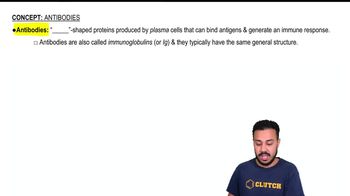
An anti-antibody is an antibody that binds specifically to another antibody, often used to detect or amplify the presence of the primary antibody. It is especially useful when the antigen itself is an antibody, enabling detection through secondary binding and enhancing assay sensitivity.
Recommended video: