
Ch. 20 - Pathogenic Gram-Negative Cocci and Bacilli
Bauman - Microbiology with Diseases by Taxonomy 6th Edition
Bauman6th EditionMicrobiology with Diseases by TaxonomyISBN: 9780134832302Not the one you use?Change textbook
Chapter 20, Problem 1

Match each bacterium with the disease or manifestations it causes.


1. _____ Escherichia coli
2. _____ Klebsiella pneumoniae
3. _____ Proteus mirabilis
4. _____ Salmonella enterica serotype Typhi
5. _____ Shigella flexneri
6. _____ Yersinia pestis


A. Bubonic plague
B. Typhoid fever
C. Gastroenteritis
D. Kidney stones
E. Pus-filled, bloody stools; cramps; fever; and diarrhea
F. Pneumonia

Verified step by step guidance
1
Step 1: Understand the characteristics and common diseases caused by each bacterium. For example, Escherichia coli is often associated with gastrointestinal infections and urinary tract infections.
Step 2: Match Escherichia coli with the disease or manifestation it most commonly causes. Since E. coli is a frequent cause of gastroenteritis, it corresponds to option C (Gastroenteritis).
Step 3: Identify Klebsiella pneumoniae, which is known for causing respiratory infections, particularly pneumonia. Therefore, it matches with option F (Pneumonia).
Step 4: Recognize Proteus mirabilis, which is linked to urinary tract infections and is known for contributing to the formation of kidney stones due to its urease activity. This matches with option D (Kidney stones).
Step 5: For Salmonella enterica serotype Typhi, associate it with typhoid fever, a systemic infection characterized by prolonged fever and other symptoms, matching option B (Typhoid fever). Similarly, Shigella flexneri causes dysentery with bloody stools and cramps, matching option E, and Yersinia pestis is the causative agent of bubonic plague, matching option A.

Verified video answer for a similar problem:

This video solution was recommended by our tutors as helpful for the problem above.
Video duration:
2m
Was this helpful?

Key Concepts

Here are the essential concepts you must grasp in order to answer the question correctly.

Pathogenic Bacteria and Their Associated Diseases

Different bacteria cause specific diseases based on their virulence factors and infection sites. Understanding which bacterium causes which disease helps in diagnosis and treatment. For example, Yersinia pestis causes bubonic plague, while Salmonella Typhi causes typhoid fever.
Recommended video:
Guided course
03:40
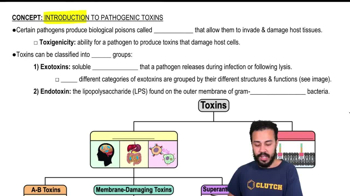
Introduction to Pathogenic Toxins

Clinical Manifestations of Bacterial Infections

Bacterial infections produce characteristic symptoms and signs, such as bloody diarrhea in Shigella infections or pneumonia caused by Klebsiella pneumoniae. Recognizing these manifestations aids in linking bacteria to diseases.
Recommended video:
Guided course
02:35
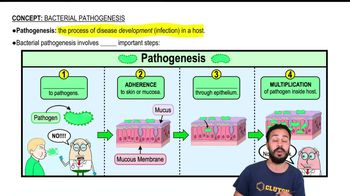
Intro to Bacterial Pathogenesis

Bacterial Physiology and Pathogenesis

Some bacteria have unique physiological traits influencing disease, like Proteus mirabilis producing urease that contributes to kidney stone formation. Understanding these mechanisms clarifies how bacteria cause specific clinical outcomes.
Recommended video:
Guided course
02:35
Intro to Bacterial Pathogenesis