Ch. 20 - Pathogenic Gram-Negative Cocci and Bacilli
Bauman - Microbiology with Diseases by Taxonomy 6th Edition
Bauman6th EditionMicrobiology with Diseases by TaxonomyISBN: 9780134832302Not the one you use?Change textbook
Chapter 20, Problem 7

Which of the following bacteria might be responsible for the formation of petechiae in a host?
a. Neisseria meningitidis
b. Escherichia coli O157:H7
c. Klebsiella
d. Proteus mirabilis

Verified step by step guidance
1
Understand what petechiae are: small red or purple spots on the skin caused by minor bleeding from broken capillary blood vessels.
Recall which bacteria are known to cause diseases associated with petechiae. Petechiae often result from infections that affect blood vessels or cause septicemia.
Review the characteristics of each bacterium listed: Neisseria meningitidis is known for causing meningitis and meningococcemia, which can lead to petechiae due to vascular damage.
Escherichia coli O157:H7 is primarily associated with gastrointestinal illness and hemolytic uremic syndrome, but not typically petechiae formation.
Klebsiella and Proteus mirabilis are usually linked to urinary tract infections and other localized infections, not commonly causing petechiae.

Verified video answer for a similar problem:

This video solution was recommended by our tutors as helpful for the problem above.
Video duration:
2m
Was this helpful?

Key Concepts

Here are the essential concepts you must grasp in order to answer the question correctly.

Petechiae and Their Clinical Significance

Petechiae are small, red or purple spots on the skin caused by minor bleeding from broken capillary blood vessels. They often indicate vascular damage or platelet abnormalities and can be a sign of serious infections or systemic diseases.
Recommended video:
Guided course
03:59
Archaeal Cell Membranes

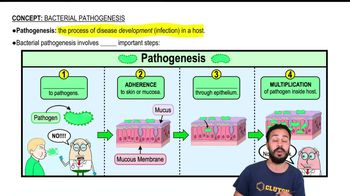
Neisseria meningitidis Pathogenesis

Neisseria meningitidis is a gram-negative bacterium known for causing meningitis and septicemia. It can invade the bloodstream, damaging blood vessels and leading to petechiae due to endotoxin-induced vascular injury and disseminated intravascular coagulation.
Recommended video:
Guided course
02:35
Intro to Bacterial Pathogenesis

Differentiation of Bacterial Pathogens by Clinical Manifestations

Different bacteria cause distinct clinical symptoms based on their virulence factors and infection sites. Understanding which bacteria cause vascular damage and petechiae helps differentiate pathogens like Neisseria meningitidis from others such as E. coli O157:H7, Klebsiella, or Proteus mirabilis.
Recommended video:
Guided course
03:27
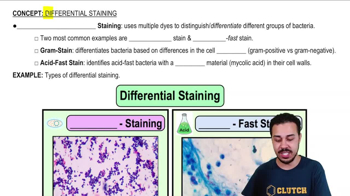
Differential Staining