Ch. 22 - Pathogenic Fungi
Bauman - Microbiology with Diseases by Taxonomy 6th Edition
Bauman6th EditionMicrobiology with Diseases by TaxonomyISBN: 9780134832302Not the one you use?Change textbook
Chapter 22, Problem 6

Indicate whether each statement is true or false. If the statement is false, change the underlined word or phrase to make the statement true.


_____ Coccidioidomycosis does not occur normally outside the Western Hemisphere.

Verified step by step guidance
1
Step 1: Understand the statement: 'Coccidioidomycosis does not occur normally outside the Western Hemisphere.' This is a geographical and epidemiological claim about the distribution of the disease.
Step 2: Recall that Coccidioidomycosis, also known as Valley fever, is caused by fungi of the genus Coccidioides, which are endemic primarily in certain arid regions of the Western Hemisphere, especially the southwestern United States, parts of Mexico, and Central and South America.
Step 3: Evaluate the truth of the statement based on the known endemic regions. Since Coccidioidomycosis is typically found in the Western Hemisphere and is rare or absent in other parts of the world, the statement is true as it stands.
Step 4: If the statement were false, you would need to identify a region outside the Western Hemisphere where Coccidioidomycosis occurs normally and replace 'Western Hemisphere' with that region. However, no such region is known for endemic Coccidioidomycosis.
Step 5: Conclude that the statement is true and no changes are necessary.

Verified video answer for a similar problem:

This video solution was recommended by our tutors as helpful for the problem above.
Video duration:
2m
Was this helpful?

Key Concepts

Here are the essential concepts you must grasp in order to answer the question correctly.

Geographical Distribution of Coccidioidomycosis

Coccidioidomycosis, also known as Valley fever, is primarily found in arid regions of the Western Hemisphere, especially the southwestern United States, parts of Mexico, and Central and South America. Understanding its endemic areas is crucial for diagnosing and managing the disease.
Recommended video:
Guided course
05:22
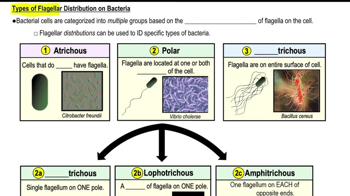
Types of Flagellar Distribution on Bacteria

Etiology and Pathogen Characteristics

Coccidioidomycosis is caused by the fungi Coccidioides immitis and Coccidioides posadasii. These fungi thrive in soil and release spores that can be inhaled, leading to infection. Recognizing the pathogen helps in understanding disease transmission and epidemiology.
Recommended video:
Guided course
03:40
Introduction to Pathogenic Toxins

True/False Question Strategy in Microbiology

When answering true/false questions, especially those requiring correction, it is important to identify the factual accuracy of statements and know how to modify incorrect parts to reflect scientific truth. This skill aids in reinforcing precise microbiological knowledge.
Recommended video:
Guided course
07:27
Introduction to Microbiology