

Ch. 24 - Pathogenic DNA Viruses
Bauman - Microbiology with Diseases by Taxonomy 6th Edition
Bauman6th EditionMicrobiology with Diseases by TaxonomyISBN: 9780134832302Not the one you use?Change textbook
Chapter 24, Problem 9

A distinguishing feature of poxvirus is _____.
a. its large size
b. a polyhedral capsid
c. the type of RNA it contains
d. the production of several types of warts

Verified step by step guidance
1
Step 1: Understand the general characteristics of poxviruses. Poxviruses are a family of viruses known for their unique structural and biological features.
Step 2: Recall that poxviruses are among the largest and most complex animal viruses, which is unusual compared to many other viruses that are smaller.
Step 3: Consider the shape of the virus. Unlike many viruses that have polyhedral capsids, poxviruses have a complex, brick-shaped or ovoid structure and do not have a typical polyhedral capsid.
Step 4: Evaluate the type of nucleic acid. Poxviruses contain double-stranded DNA, not RNA, so the option about RNA type is incorrect.
Step 5: Recognize that while poxviruses can cause skin lesions, the production of several types of warts is more characteristic of papillomaviruses, not poxviruses.

Verified video answer for a similar problem:

This video solution was recommended by our tutors as helpful for the problem above.
Video duration:
2m
Was this helpful?

Key Concepts

Here are the essential concepts you must grasp in order to answer the question correctly.

Poxvirus Morphology and Size

Poxviruses are among the largest and most complex viruses, notable for their large size compared to other viruses. Their size allows them to be visible under a light microscope, which is unusual for viruses. This large size is a key distinguishing feature.
Recommended video:
Guided course
02:44
Types of Bacterial Cell Morphology

Capsid Structure of Viruses

Viruses have protein shells called capsids that protect their genetic material. Capsid shapes vary, commonly being icosahedral (polyhedral) or helical. Poxviruses, however, have a unique complex structure rather than a simple polyhedral capsid.
Recommended video:
Guided course
04:47
General Structure of Viruses

Genomic Material of Poxviruses

Poxviruses contain double-stranded DNA as their genetic material, unlike some viruses that have RNA genomes. The type of nucleic acid is crucial for virus classification and replication mechanisms. Poxviruses do not contain RNA, so the type of RNA is not a distinguishing feature.
Recommended video:
Guided course
03:18
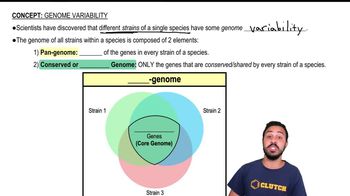
Genome Variability
Related Practice
Textbook Question

Which of the following statements is false?

a. B19 virus is the primary parvovirus of humans.

b. Erythema infectiosum is caused by a parvovirus.

c. In children, parvovirus infections are accompanied by a high mortality rate.

d. Parvovirus infection in humans results in infectious reddening of the skin.

1133
views
Textbook Question

A man experienced a laboratory accident in which he was infected with adenovirus. What signs or symptoms might he exhibit?

a. Sore throat

b. Headache

c. Pinkeye

d. All of the above

1181
views
Textbook Question

Which of the following is an inflammatory condition of the liver?

a. Fifth disease

b. PML

c. Seed warts

d. Hepatitis

1112
views
Textbook Question

Which of the following viral families is most likely to contain viruses that exist in a latent

state in humans?

a. Herpesviridae

b. Poxviridae

c. Adenoviridae

d. Parvoviridae

645
views
Textbook Question

Monkeypox has been diagnosed in several humans in the Democratic Republic of the Congo. What might be recommended to prevent further risk of infection?

a. Catch the monkeys for inoculation with monkeypox vaccine.

b. Remove infected tissues from humans with chemicals, by surgery, or by freezing.

c. Reinstate smallpox vaccinations for the country's population.

d. The diagnosis must have been incorrect because humans are unaffected by

monkeypox.

1044
views
Textbook Question

DNA viruses in which of the following families are relatively large and thus potentially

well suited for the introduction of genetic material in gene therapy?

a. Herpesviridae

b. Poxviridae

c. Papillomaviridae

d. Hepadnaviridae

1373
views