Ch. 8 - Recombinant DNA Technology
Bauman - Microbiology with Diseases by Taxonomy 6th Edition
Bauman6th EditionMicrobiology with Diseases by TaxonomyISBN: 9780134832302Not the one you use?Change textbook
Chapter 8, Problem 1

Indicate which of the following are true and which are false. Rewrite any false statements to make them true by changing the underlined words.
__________ Restriction enzymes inhibit the movement of DNA at specific sites.

Verified step by step guidance
1
Step 1: Understand the role of restriction enzymes in molecular biology. Restriction enzymes, also known as restriction endonucleases, are proteins that recognize specific sequences of DNA and cut the DNA at or near these sites.
Step 2: Analyze the statement: 'Restriction enzymes inhibit the movement of DNA at specific sites.' Consider whether restriction enzymes function by inhibiting movement or by cutting DNA.
Step 3: Recognize that restriction enzymes do not inhibit movement of DNA; instead, they cleave DNA at specific recognition sites, which is a key step in many molecular biology techniques such as cloning.
Step 4: Rewrite the false statement to make it true by replacing 'inhibit the movement of DNA' with 'cut DNA at specific sites.' The corrected statement should read: 'Restriction enzymes cut DNA at specific sites.'
Step 5: Summarize that restriction enzymes are molecular scissors that recognize specific DNA sequences and cleave the DNA, rather than inhibiting its movement.

Verified video answer for a similar problem:

This video solution was recommended by our tutors as helpful for the problem above.
Video duration:
2m
Was this helpful?

Key Concepts

Here are the essential concepts you must grasp in order to answer the question correctly.

Restriction Enzymes

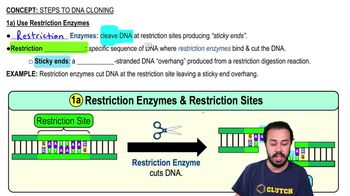
Restriction enzymes, also known as restriction endonucleases, are proteins that recognize specific DNA sequences and cut the DNA at or near these sites. They do not inhibit movement but cleave DNA, which is essential in molecular cloning and genetic analysis.
Recommended video:
Guided course
03:27
1a) Use Restriction Enzymes

DNA Mobility in Gel Electrophoresis

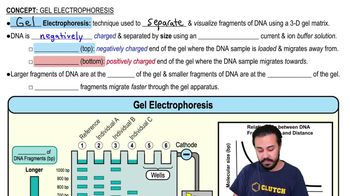
DNA mobility refers to the movement of DNA fragments through a gel matrix during electrophoresis, influenced by size and charge. Restriction enzymes generate DNA fragments of specific lengths, which then separate based on size, but the enzymes themselves do not inhibit DNA movement.
Recommended video:
Guided course
07:58
Gel Electrophoresis

Function of Restriction Sites

Restriction sites are specific nucleotide sequences recognized by restriction enzymes where DNA is cut. These sites allow precise cleavage, enabling the study and manipulation of DNA fragments, but they do not act to inhibit DNA movement.
Recommended video:
Guided course
06:04
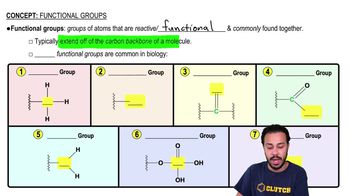
Functional Groups