Ch. 9 - Controlling Microbial Growth in the Environment
Bauman - Microbiology with Diseases by Taxonomy 6th Edition
Bauman6th EditionMicrobiology with Diseases by TaxonomyISBN: 9780134832302Not the one you use?Change textbook
Chapter 9, Problem 7

A company that manufactures an antimicrobial cleaner for kitchen counters claims that its product is effective when used in a 50% water solution. By what means might scientists best verify this statement?
a. Disk-diffusion test
b. Phenol coefficient
c. Filter paper test
d. In-use test

Verified step by step guidance
1
Understand the purpose of each test method listed: the disk-diffusion test measures the zone of inhibition of microbial growth around a disk soaked with the antimicrobial agent; the phenol coefficient compares the effectiveness of the antimicrobial agent to phenol; the filter paper test is similar to disk-diffusion but uses filter paper disks; the in-use test evaluates the antimicrobial product's effectiveness under actual usage conditions.
Recognize that the company claims effectiveness specifically when the product is diluted to 50% in water, which implies testing the product in conditions that mimic real-life application rather than just laboratory conditions.
Consider that the disk-diffusion and filter paper tests are primarily laboratory assays that measure inhibition zones but may not reflect practical usage scenarios such as surface cleaning in kitchens.
Note that the phenol coefficient is a comparative measure of antimicrobial strength but does not directly test the product's effectiveness in real-world conditions or specific dilutions.
Conclude that the in-use test is designed to verify antimicrobial effectiveness under actual conditions of use, including the specified 50% water dilution, making it the best method to verify the company's claim.

Verified video answer for a similar problem:

This video solution was recommended by our tutors as helpful for the problem above.
Video duration:
3m
Was this helpful?

Key Concepts

Here are the essential concepts you must grasp in order to answer the question correctly.

Disk-Diffusion Test

The disk-diffusion test evaluates antimicrobial effectiveness by placing disks soaked with the agent on an agar plate inoculated with bacteria. The zone of inhibition around the disk indicates the agent's ability to prevent microbial growth. It is useful for comparing antimicrobial potency but may not reflect real-world usage conditions.
Recommended video:
Guided course
06:59
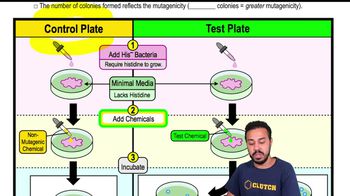
The Ames Test

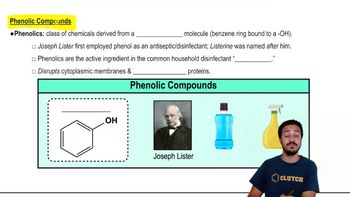
Phenol Coefficient

The phenol coefficient is a quantitative measure comparing the effectiveness of a disinfectant to phenol under standardized conditions. It helps determine relative antimicrobial strength but does not assess performance in practical or diluted applications like a 50% water solution.
Recommended video:
Guided course
02:27
Phenolic Compounds

In-Use Test

The in-use test evaluates the antimicrobial product's effectiveness under actual usage conditions, such as on kitchen counters with the recommended dilution. This method provides realistic data on how well the cleaner works in practice, making it ideal for verifying manufacturer claims.
Recommended video:
Guided course
06:59
The Ames Test