Ch. 9 - Controlling Microbial Growth in the Environment
Bauman - Microbiology with Diseases by Taxonomy 6th Edition
Bauman6th EditionMicrobiology with Diseases by TaxonomyISBN: 9780134832302Not the one you use?Change textbook
Chapter 9, Problem 10

Compare and contrast the action of alcohols, halogens, and oxidizing agents in controlling microbial growth.

Verified step by step guidance
1
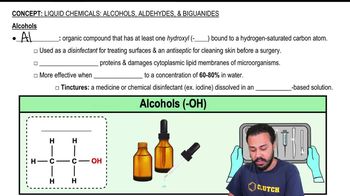
Step 1: Define the general mechanism of action for alcohols in microbial control. Explain that alcohols, such as ethanol and isopropanol, primarily denature proteins and disrupt cell membranes, leading to leakage of cellular contents and cell death. Emphasize their effectiveness against bacteria and enveloped viruses but limited action on spores.
Step 2: Describe how halogens, like chlorine and iodine, control microbial growth. Highlight that halogens act by oxidizing cellular components, including proteins and nucleic acids, and can penetrate cell walls to cause irreversible damage. Note their broad-spectrum activity, including effectiveness against bacteria, viruses, fungi, and spores (depending on concentration and exposure).
Step 3: Explain the role of oxidizing agents such as hydrogen peroxide and peracetic acid. Discuss that these agents produce reactive oxygen species that damage proteins, lipids, and DNA, leading to oxidative stress and cell death. Mention their ability to kill a wide range of microorganisms, including spores, due to strong oxidizing properties.
Step 4: Compare the spectrum of activity and limitations of each group. For example, alcohols are rapid and effective but not sporicidal; halogens are broad-spectrum but can be inactivated by organic matter; oxidizing agents are potent and sporicidal but may be unstable or corrosive.
Step 5: Summarize the practical applications and considerations for each agent in microbial control, such as alcohols being used for skin antisepsis, halogens for water disinfection, and oxidizing agents for sterilization of medical equipment.

Verified video answer for a similar problem:

This video solution was recommended by our tutors as helpful for the problem above.
Video duration:
2m
Was this helpful?

Key Concepts

Here are the essential concepts you must grasp in order to answer the question correctly.

Mechanism of Action of Alcohols

Alcohols, such as ethanol and isopropanol, control microbial growth primarily by denaturing proteins and dissolving lipids in the cell membrane. This disrupts membrane integrity, leading to leakage of cellular contents and cell death. They are effective against bacteria and enveloped viruses but less so against spores.
Recommended video:

Role of Halogens in Microbial Control

Halogens like chlorine and iodine act as strong oxidizing agents that disrupt microbial proteins and nucleic acids. They penetrate cells and oxidize essential enzymes, leading to cell death. Halogens are broad-spectrum antimicrobials effective against bacteria, viruses, fungi, and spores under certain conditions.
Recommended video:
Guided course
00:56
Liquid Chemicals: Halogens

Function of Oxidizing Agents

Oxidizing agents such as hydrogen peroxide and peracetic acid kill microbes by producing reactive oxygen species that damage cellular components including DNA, proteins, and lipids. They are effective against a wide range of microorganisms, including spores, and are often used for sterilization and disinfection.
Recommended video:
Guided course
04:38
Pyruvate Oxidation