Ch. 17 - Skin and Eye Infections
Norman-McKay- Microbiology: Basic and Clinical Principles 2nd Edition
Norman-McKay2nd EditionMicrobiology: Basic and Clinical PrinciplesISBN: 9780137661619Not the one you use?Change textbook
Chapter 17, Problem 6

All of the following are commonly associated with Streptococcus pyogenes EXCEPT:
a. impetigo.
b. cellulitis.
c. scalded skin syndrome.
d. necrotizing fasciitis.
e. strep throat.

Verified step by step guidance
1
Step 1: Understand the characteristics and diseases caused by Streptococcus pyogenes. This bacterium is a Group A Streptococcus known to cause a variety of infections, including skin infections and throat infections.
Step 2: Review each option and recall whether it is commonly linked to Streptococcus pyogenes. For example, impetigo, cellulitis, necrotizing fasciitis, and strep throat are well-documented infections caused by this bacterium.
Step 3: Identify the disease that is not typically caused by Streptococcus pyogenes. Scalded skin syndrome is usually caused by Staphylococcus aureus, which produces exfoliative toxins leading to this condition.
Step 4: Confirm that scalded skin syndrome is the exception by comparing the typical causative agents of each listed disease.
Step 5: Conclude that the correct answer is the disease not commonly associated with Streptococcus pyogenes, which is scalded skin syndrome.

Verified video answer for a similar problem:

This video solution was recommended by our tutors as helpful for the problem above.
Video duration:
1m
Was this helpful?

Key Concepts

Here are the essential concepts you must grasp in order to answer the question correctly.

Streptococcus pyogenes Characteristics

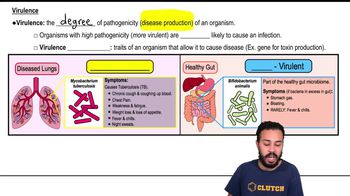
Streptococcus pyogenes is a Gram-positive bacterium known for causing a variety of human infections, primarily involving the skin and throat. It is beta-hemolytic and belongs to Group A Streptococcus (GAS). Understanding its pathogenic mechanisms helps identify diseases it commonly causes.
Recommended video:
Guided course
05:09
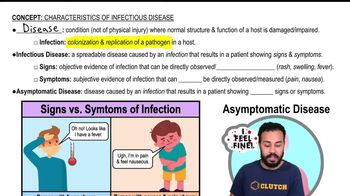
Intro to Characteristics of Infectious Disease

Common Diseases Caused by Streptococcus pyogenes

S. pyogenes is commonly associated with infections such as impetigo, cellulitis, necrotizing fasciitis, and strep throat. These diseases result from its ability to invade tissues and produce toxins, leading to inflammation and tissue damage.
Recommended video:

Scalded Skin Syndrome and Its Etiology

Scalded skin syndrome is caused by exfoliative toxins produced by Staphylococcus aureus, not Streptococcus pyogenes. This distinction is crucial for diagnosis and treatment, as it differentiates the causative agent based on toxin production and clinical presentation.
Recommended video:
Guided course
03:58
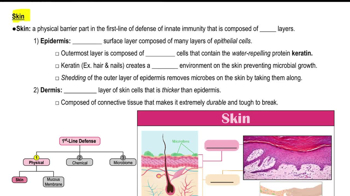
Physical Barriers in First-Line Defenses: Skin
Related Practice
Textbook Question

Which of the following is associated with chronic neuralgia?

a. Herpes simplex 1 virus

b. Streptococcus pyogenes

c, Measles virus

d. Varicella-zoster virus

e. Papilloma virus

1113
views
Textbook Question

Select ALL the true statements about dermatophytes:

a. They are a group of bacteria that cause cutaneous infections.

b. They may be treated with antifungals without knowing the exact causative agent.

c. They are easily treated with antibiotics.

d. They are commonly acquired from the soil, environment, or animals.

e. They produce enzymes that digest keratin found in hair, nails, and skin.

1141
views
Textbook Question

Which genus is primarily associated with acne?

a. Staphylococcus

b. Propionibacterium

c. Clostridium

d. Streptococcus

e. Pseudomonas

1172
views
Textbook Question

Which of the following is not a virulence factor of P. aeruginosa?

a. Protein A

b, Exotoxins

c. Enzymes that damage host tissues

d. Endotoxins

e. Factors that enhance biofilm formation

1099
views
Textbook Question

Select the false statement about cutaneous candidiasis:

a. The most common causative species is Candida albicans.

b. Candida albicans can be part of normal microbiota.

c. Usage of antibiotics can increase the chance of cutaneous candidiasis.

d. Changes in pH can permit overgrowth.

e. The causative agents are naturally found as mold filaments.

1139
views
Textbook Question

Choose the false statement about HSV-1:

a. Viruses may be transmitted via wrestling mats.

b. Viruses may be transmitted via contact with lesions.

c. Viruses may be transmitted via the saliva of others with the virus.

d. Viruses may reactivate under stress-inducing conditions.

e. Viruses can be easily cured with common antivirals.

1113
views