Ch. 4 - Introduction to Eukaryotic Cells
Norman-McKay- Microbiology: Basic and Clinical Principles 2nd Edition
Norman-McKay2nd EditionMicrobiology: Basic and Clinical PrinciplesISBN: 9780137661619Not the one you use?Change textbook
Chapter 4, Problem 16

Which of the following statements are true regarding protozoans? Select all that apply.
a. They are unicellular.
b. They have cell walls.
c. They are usually nonphotosynthetic.
d. They are animal-like protists.
e. Some are pathogens.
f. They usually have simple life cycles.
g. They often use sexual and asexual reproduction.
h. They usually lack nuclei.
i. They all have mitochondria.

Verified step by step guidance
1
Step 1: Understand that protozoans are a diverse group of unicellular eukaryotic organisms, often classified as animal-like protists. This means they are single-celled and have complex cellular structures including nuclei.
Step 2: Recall that protozoans do not have cell walls, unlike plants or fungi. Instead, they have flexible cell membranes that allow movement and interaction with their environment.
Step 3: Recognize that protozoans are usually nonphotosynthetic, meaning they do not perform photosynthesis like plants or algae. Instead, they obtain nutrients by consuming organic material or other organisms.
Step 4: Note that many protozoans can be pathogenic, causing diseases in humans and other animals. This highlights their medical importance.
Step 5: Understand that protozoans often have complex life cycles involving both sexual and asexual reproduction, which allows them to adapt and survive in various environments.

Verified video answer for a similar problem:

This video solution was recommended by our tutors as helpful for the problem above.
Video duration:
4m
Was this helpful?

Key Concepts

Here are the essential concepts you must grasp in order to answer the question correctly.

Cellular Structure of Protozoans

Protozoans are unicellular eukaryotic organisms, meaning each individual is a single cell with a nucleus and organelles. Unlike plants and fungi, protozoans do not have cell walls, which distinguishes them structurally from other protists.
Recommended video:
Guided course
02:32
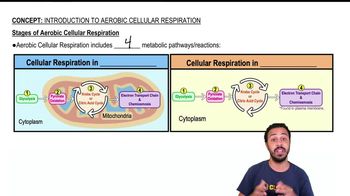
Stages of Aerobic Cellular Respiration

Nutrition and Classification of Protozoans

Protozoans are typically heterotrophic, meaning they obtain nutrients by consuming other organisms rather than photosynthesis. Because of their animal-like behavior and nutrition, they are often classified as animal-like protists.
Recommended video:
Guided course
05:58
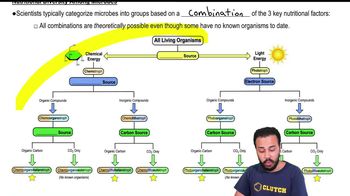
Nutritional Diversity Among Microbes

Reproduction and Life Cycles of Protozoans

Protozoans can reproduce both sexually and asexually, often exhibiting complex life cycles that may include multiple stages and hosts. Some protozoans are pathogenic, causing diseases in humans and animals.
Recommended video: