Ch. 6 - Viruses and Prions
Norman-McKay- Microbiology: Basic and Clinical Principles 2nd Edition
Norman-McKay2nd EditionMicrobiology: Basic and Clinical PrinciplesISBN: 9780137661619Not the one you use?Change textbook
Chapter 6, Problem 5

An accidental needle stick occurs during the routine treatment of an HIV-positive patient who arrives at your clinic. Immediate administration of _______________ can block viral entry.
a. Enfuvirtide
b. Vapendavir
c. AZT
d. Amantadine

Verified step by step guidance
1
Step 1: Understand the context of the problem, which involves an accidental needle stick exposure to HIV, a virus that infects host cells by entering them.
Step 2: Recall that blocking viral entry means preventing the virus from fusing with or penetrating the host cell membrane, which stops infection at the earliest stage.
Step 3: Review the mechanisms of the drugs listed: enfuvirtide is a fusion inhibitor that blocks HIV from entering cells; vapendavir targets rhinoviruses; AZT is a reverse transcriptase inhibitor acting after viral entry; amantadine blocks influenza virus uncoating.
Step 4: Identify that the drug effective in blocking HIV viral entry immediately after exposure is enfuvirtide, as it specifically inhibits the fusion of HIV with the host cell membrane.
Step 5: Conclude that immediate administration of enfuvirtide can block viral entry in this scenario.

Verified video answer for a similar problem:

This video solution was recommended by our tutors as helpful for the problem above.
Video duration:
3m
Was this helpful?

Key Concepts

Here are the essential concepts you must grasp in order to answer the question correctly.

HIV Viral Entry Mechanism

HIV enters host cells by binding its envelope glycoproteins to CD4 receptors and co-receptors on the cell surface, followed by fusion of the viral and cellular membranes. Blocking this entry step prevents the virus from infecting new cells, which is critical in early intervention after exposure.
Recommended video:
Guided course
05:12
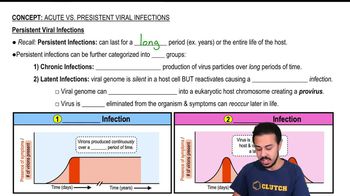
Persistent Viral Infections

Enfuvirtide as an Entry Inhibitor

Enfuvirtide is a fusion inhibitor that binds to the HIV gp41 protein, preventing the conformational changes needed for viral fusion with the host cell membrane. It is used to block HIV entry into cells, making it effective for post-exposure prophylaxis immediately after potential exposure.
Recommended video:
Guided course
02:29
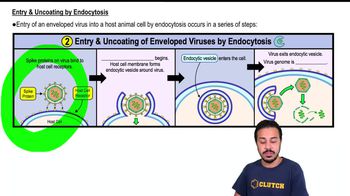
Entry & Uncoating by Endocytosis

Post-Exposure Prophylaxis (PEP) for HIV

PEP involves administering antiretroviral drugs soon after potential HIV exposure to prevent infection. Drugs that block viral entry, like enfuvirtide, are crucial in the initial phase, while reverse transcriptase inhibitors like AZT act later in the viral replication cycle.
Recommended video:
Guided course
04:26
Post-Translational Modification