Ch. 6 - Viruses and Prions
Norman-McKay- Microbiology: Basic and Clinical Principles 2nd Edition
Norman-McKay2nd EditionMicrobiology: Basic and Clinical PrinciplesISBN: 9780137661619Not the one you use?Change textbook
Chapter 6, Problem 10

Which of the following is a potential feature of an animal virus? Select all that apply.
a. Presence of an envelope
b. Presence of a naked icosahedral capsid
c. Ability to inject naked RNA into the host cell
d. Ability to integrate into the host cell’s genome
e. Ability to cause host cell lysis
f. Ability to build DNA from an RNA template

Verified step by step guidance
1
Step 1: Understand the structure of animal viruses. Animal viruses can have either an envelope or a naked capsid. The envelope is derived from the host cell membrane and contains viral glycoproteins, so the presence of an envelope (option a) is a potential feature.
Step 2: Consider the capsid structure. Animal viruses can have icosahedral capsids that are either enveloped or naked. Therefore, the presence of a naked icosahedral capsid (option b) is also a potential feature.
Step 3: Evaluate the method of genome entry. Unlike bacteriophages, animal viruses typically enter the host cell by endocytosis or membrane fusion rather than injecting their genome directly. Thus, the ability to inject naked RNA into the host cell (option c) is generally not a feature of animal viruses.
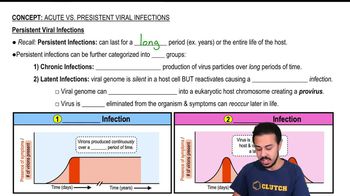
Step 4: Analyze viral genome integration. Some animal viruses, such as retroviruses, have the ability to integrate their genome into the host cell’s DNA, making option d a potential feature.
Step 5: Consider viral replication and effects on the host cell. Animal viruses can cause host cell lysis (option e) as part of their replication cycle, and some viruses (like retroviruses) can synthesize DNA from an RNA template using reverse transcriptase (option f). Both are potential features.

Verified video answer for a similar problem:

This video solution was recommended by our tutors as helpful for the problem above.
Video duration:
3m
Was this helpful?

Key Concepts

Here are the essential concepts you must grasp in order to answer the question correctly.

Viral Structure and Envelopes

Animal viruses can have either a naked capsid or an envelope derived from the host cell membrane. The envelope contains viral glycoproteins essential for host cell recognition and entry, making it a common feature in many animal viruses but absent in some bacteriophages.
Recommended video:
Guided course
05:12
Persistent Viral Infections

Viral Genome Integration and Replication

Some animal viruses, especially retroviruses, can integrate their genetic material into the host genome, allowing persistent infection. Additionally, certain viruses can reverse transcribe RNA into DNA, enabling integration and replication within the host.
Recommended video:
Guided course
03:18
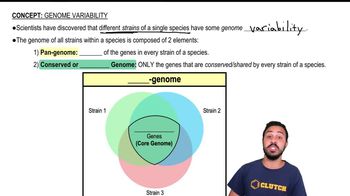
Genome Variability

Mechanisms of Viral Entry and Host Cell Interaction

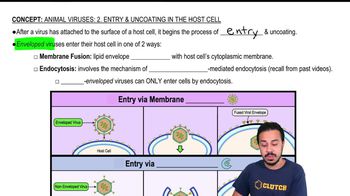
Animal viruses typically enter host cells via endocytosis or membrane fusion rather than injecting nucleic acid directly. They can cause host cell lysis or persist without killing the cell, depending on their replication strategy and life cycle.
Recommended video:
Guided course
04:29
Animal Viruses: 2. Entry & Uncoating in the Host Cell