Ch. 12 - The Eukaryotes: Fungi, Algae, Protozoa, and Helminths
Tortora - Microbiology: An Introduction 14th Edition
Tortora14th EditionMicrobiology: An IntroductionISBN: 9780138200398Not the one you use?Change textbook
Chapter 12, Problem 2

A mixed culture of Escherichia coli and Penicillium chrysogenum is inoculated onto the following culture media. On which medium would you expect each to grow? Why?
a. 0.5% peptone in tap water
b. 10% glucose in tap water

Verified step by step guidance
1
Step 1: Understand the nutritional requirements and growth preferences of Escherichia coli and Penicillium chrysogenum. E. coli is a bacterium that typically requires organic nitrogen sources like peptone and can grow in relatively simple media. Penicillium chrysogenum is a fungus that generally prefers carbohydrate-rich environments and can tolerate higher sugar concentrations.
Step 2: Analyze medium (a) which contains 0.5% peptone in tap water. Peptone provides peptides and amino acids, serving as a nitrogen and carbon source suitable for bacterial growth. Since E. coli can utilize peptone effectively, it is expected to grow well on this medium. Penicillium may not grow well here because the medium lacks sufficient carbohydrates.
Step 3: Analyze medium (b) which contains 10% glucose in tap water. This medium is rich in sugar but lacks nitrogen sources like peptone. Penicillium chrysogenum can utilize high glucose concentrations for growth, as fungi often thrive in carbohydrate-rich environments. E. coli, however, may not grow well due to the absence of nitrogen sources necessary for protein synthesis.
Step 4: Summarize the expected growth: E. coli is expected to grow on the 0.5% peptone medium due to available nitrogen and carbon sources, while Penicillium chrysogenum is expected to grow on the 10% glucose medium due to its ability to metabolize high sugar concentrations.
Step 5: Conclude by explaining that the differences in metabolic capabilities and nutrient requirements between bacteria and fungi determine their growth on these selective media.

Verified video answer for a similar problem:

This video solution was recommended by our tutors as helpful for the problem above.
Video duration:
2m
Was this helpful?

Key Concepts

Here are the essential concepts you must grasp in order to answer the question correctly.

Nutritional Requirements of Microorganisms

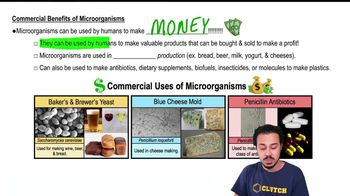
Different microorganisms have specific nutritional needs for growth. Escherichia coli, a bacterium, requires sources of nitrogen, carbon, and other nutrients, often growing well on peptone, which provides amino acids. Penicillium chrysogenum, a fungus, can utilize simple sugars like glucose as a carbon source but may not thrive on minimal nitrogen sources alone.
Recommended video:
Guided course
03:17
Commercial Benefits of Microorganisms

Osmotic Pressure and Its Effect on Microbial Growth

High solute concentrations, such as 10% glucose, create hypertonic environments that can inhibit or kill some microbes by causing water to leave their cells. While fungi like Penicillium chrysogenum often tolerate higher osmotic pressures, bacteria like E. coli may be inhibited or unable to grow in such conditions.
Recommended video:
Guided course
04:16
Temperature Requirements for Microbial Growth

Selective Growth Media and Microbial Competition

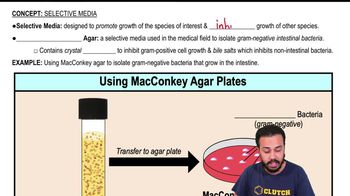
Culture media composition influences which organisms can grow by providing or limiting nutrients. In mixed cultures, media that favor one organism’s nutritional needs or environmental tolerances will promote its growth over others. Understanding these selective factors helps predict which microbe will grow on each medium.
Recommended video:
Guided course
03:27
Selective Media