Ch. 13 - Viruses, Viroids, and Prions
Tortora - Microbiology: An Introduction 14th Edition
Tortora14th EditionMicrobiology: An IntroductionISBN: 9780138200398Not the one you use?Change textbook
Chapter 13, Problem 9

Which of the following does not initiate DNA synthesis?
a. A double-stranded DNA virus (Poxviridae)
b. A DNA virus with reverse transcriptase (Hepadnaviridae)
c. An RNA virus with reverse transcriptase (Retroviridae)
d. A single-stranded RNA virus (Togaviridae)
e. None of the above

Verified step by step guidance
1
Step 1: Understand the process of DNA synthesis initiation in viruses. DNA synthesis typically requires a primer or a mechanism to start the formation of a new DNA strand from a template.
Step 2: Analyze each virus type in the options to determine if it initiates DNA synthesis: - Poxviridae (double-stranded DNA virus) directly uses its DNA for replication. - Hepadnaviridae (DNA virus with reverse transcriptase) synthesizes DNA from an RNA intermediate. - Retroviridae (RNA virus with reverse transcriptase) synthesizes DNA from RNA. - Togaviridae (single-stranded RNA virus) generally does not synthesize DNA as part of its replication cycle.
Step 3: Recall that reverse transcriptase is an enzyme that synthesizes DNA from an RNA template, so viruses with this enzyme initiate DNA synthesis through reverse transcription.
Step 4: Recognize that single-stranded RNA viruses like Togaviridae replicate their RNA genome without producing DNA, so they do not initiate DNA synthesis.
Step 5: Conclude which virus type does not initiate DNA synthesis based on the above analysis.

Verified video answer for a similar problem:

This video solution was recommended by our tutors as helpful for the problem above.
Video duration:
2m
Was this helpful?

Key Concepts

Here are the essential concepts you must grasp in order to answer the question correctly.

DNA Synthesis Initiation in Viruses

DNA synthesis initiation refers to the process by which a virus begins replicating its DNA genome. Some viruses carry enzymes or use host machinery to start DNA replication, often requiring primers or reverse transcription. Understanding which viral families initiate DNA synthesis helps determine their replication strategies.
Recommended video:
Guided course
01:10
Animal Viruses: DNA Virus Synthesis & Replication

Role of Reverse Transcriptase in Viral Replication

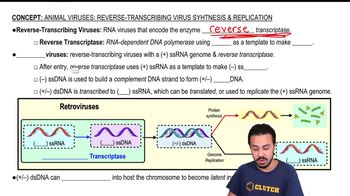
Reverse transcriptase is an enzyme that synthesizes DNA from an RNA template. Viruses like Retroviridae and Hepadnaviridae use reverse transcriptase to convert their RNA or RNA intermediates into DNA, initiating DNA synthesis indirectly. This enzyme is key to understanding how certain RNA viruses replicate via a DNA intermediate.
Recommended video:
Guided course
04:28
Animal Viruses: Reverse-Transcribing Virus Synthesis & Replication

Differences Between DNA and RNA Viruses

DNA viruses typically replicate their genomes directly as DNA, while RNA viruses replicate RNA genomes and may or may not involve DNA intermediates. Single-stranded RNA viruses like Togaviridae generally do not initiate DNA synthesis, as their replication relies on RNA-dependent RNA polymerase, not DNA synthesis.
Recommended video:
Guided course
04:36
Replication of (-) Single Strand RNA Viruses