
Ch. 18 - Practical Applications of Immunology
Tortora - Microbiology: An Introduction 14th Edition
Tortora14th EditionMicrobiology: An IntroductionISBN: 9780138200398Not the one you use?Change textbook
Chapter 18, Problem 1

Use the following choices to answer questions 1 and 2:
a. Hemolysis
b. Hemagglutination
c. Hemagglutination inhibition
d. No hemolysis
e. Precipitin ring forms
Patient’s serum, influenza virus, sheep red blood cells, and anti-sheep red blood cells are mixed in a tube. What happens if the patient has antibodies against influenza?

Verified step by step guidance
1
Step 1: Identify the components in the mixture: patient's serum (which may contain antibodies), influenza virus, sheep red blood cells (RBCs), and anti-sheep RBC antibodies.
Step 2: Understand the principle of hemagglutination: influenza virus can cause hemagglutination by binding to receptors on sheep RBCs, causing them to clump together.
Step 3: Consider the role of patient antibodies against influenza: if present, these antibodies will bind to the influenza virus and block its ability to agglutinate the sheep RBCs.
Step 4: Recognize that when antibodies block hemagglutination, this is called hemagglutination inhibition, meaning no clumping of RBCs will occur.
Step 5: Conclude that in this test, if the patient has antibodies against influenza, the expected outcome is hemagglutination inhibition (choice c).

Verified video answer for a similar problem:

This video solution was recommended by our tutors as helpful for the problem above.
Video duration:
2m
Was this helpful?

Key Concepts

Here are the essential concepts you must grasp in order to answer the question correctly.

Hemagglutination

Hemagglutination is the clumping of red blood cells caused by viruses or antibodies binding to antigens on the cell surface. Influenza virus can cause hemagglutination by attaching to sialic acid receptors on red blood cells, leading to visible clumping in a test tube.

Hemagglutination Inhibition

Hemagglutination inhibition occurs when antibodies specific to a virus bind to viral particles, preventing them from attaching to red blood cells. This stops hemagglutination, indicating the presence of antibodies against the virus in the patient’s serum.
Recommended video:
Guided course
05:03
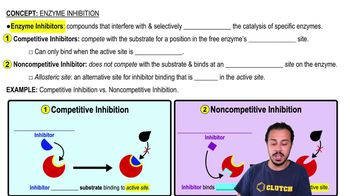
Enzyme Inhibition

Role of Anti-Sheep Red Blood Cell Antibodies

Anti-sheep red blood cell antibodies bind specifically to sheep red blood cells, causing hemolysis or agglutination. In this test, they help differentiate reactions involving sheep RBCs, clarifying whether hemolysis or agglutination is due to viral or antibody activity.
Recommended video: