
Ch. 20 - Antimicrobial Drugs
Tortora - Microbiology: An Introduction 14th Edition
Tortora14th EditionMicrobiology: An IntroductionISBN: 9780138200398Not the one you use?Change textbook
Chapter 20, Problem 3

What similar problems are encountered with antiviral, antifungal, antiprotozoan, and antihelminthic drugs?

Verified step by step guidance
1
Identify the common challenges faced by antimicrobial drugs targeting viruses, fungi, protozoa, and helminths by considering their biological differences from bacteria and human cells.
Understand that one major problem is selective toxicity, which means the drug must harm the pathogen without damaging the host's cells; this is difficult because these pathogens are eukaryotic (like human cells) or have complex life cycles.
Recognize that drug resistance can develop in these pathogens, similar to bacteria, making treatment less effective over time.
Consider the issue of toxicity and side effects, as drugs targeting eukaryotic pathogens often affect human cells due to similarities, leading to adverse reactions.
Note that the complexity of the pathogens' life cycles and their ability to hide within host cells or tissues can make it difficult for drugs to reach and effectively eliminate them.

Verified video answer for a similar problem:

This video solution was recommended by our tutors as helpful for the problem above.
Video duration:
2m
Was this helpful?

Key Concepts

Here are the essential concepts you must grasp in order to answer the question correctly.

Selective Toxicity

Selective toxicity refers to the ability of a drug to target pathogens without harming the host. Antiviral, antifungal, antiprotozoan, and antihelminthic drugs often struggle with this because these pathogens share many cellular features with human cells, making it difficult to kill the pathogen without damaging host tissues.
Recommended video:
Guided course
03:27
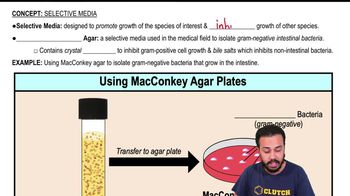
Selective Media

Drug Resistance

Drug resistance occurs when pathogens evolve mechanisms to survive exposure to drugs designed to kill them. This is a common problem across antiviral, antifungal, antiprotozoan, and antihelminthic treatments, leading to reduced drug efficacy and the need for new or combination therapies.
Recommended video:
Guided course
06:20
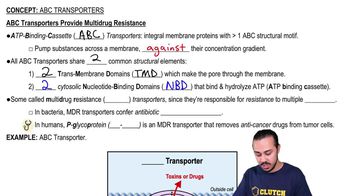
ABC Transporters Provide Multidrug Resistance

Limited Drug Targets

Many eukaryotic pathogens and viruses have fewer unique biochemical pathways or structures compared to bacteria, limiting the number of effective drug targets. This scarcity complicates the development of drugs that can specifically inhibit these pathogens without affecting human cells.
Recommended video:
Guided course
02:58
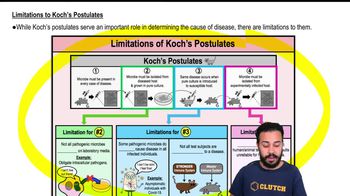
Limitations to Koch's Postulates