Ch. 23 - Microbial Diseases of the Cardiovascular and Lymphatic Systems
Tortora - Microbiology: An Introduction 14th Edition
Tortora14th EditionMicrobiology: An IntroductionISBN: 9780138200398Not the one you use?Change textbook
Chapter 23, Problem 4

Use the following choices to answer the question given below:
a. Ehrlichiosis
b. Lyme disease
c. Septic shock
d. Toxoplasmosis
e. Viral hemorrhagic fever
A patient presents with mental confusion, rapid breathing and heart rate, and low blood pressure. What is your diagnosis?

Verified step by step guidance
1
Step 1: Identify the key symptoms presented by the patient: mental confusion, rapid breathing, rapid heart rate, and low blood pressure.
Step 2: Understand what each symptom typically indicates in a clinical context. For example, mental confusion can be a sign of poor oxygen delivery to the brain, rapid breathing and heart rate often indicate the body is under stress, and low blood pressure suggests circulatory failure.
Step 3: Review the list of possible diagnoses and recall their common clinical presentations: ehrlichiosis (tick-borne infection), Lyme disease (tick-borne infection with rash and joint symptoms), septic shock (a severe systemic response to infection causing low blood pressure and organ dysfunction), toxoplasmosis (parasitic infection often affecting the brain), and viral hemorrhagic fever (severe viral infection causing bleeding and shock).
Step 4: Match the symptoms to the most likely diagnosis. The combination of rapid breathing, rapid heart rate, low blood pressure, and mental confusion is characteristic of septic shock, which is a life-threatening condition caused by an overwhelming infection leading to circulatory collapse.
Step 5: Conclude that the diagnosis is septic shock based on the symptom profile and the clinical definitions of the listed diseases.

Verified video answer for a similar problem:

This video solution was recommended by our tutors as helpful for the problem above.
Video duration:
1m
Was this helpful?

Key Concepts

Here are the essential concepts you must grasp in order to answer the question correctly.

Septic Shock

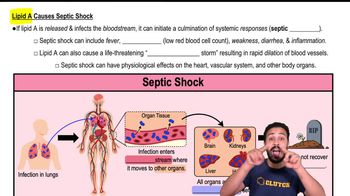
Septic shock is a severe and potentially fatal condition caused by an overwhelming immune response to infection, leading to dangerously low blood pressure, rapid heart rate, and rapid breathing. It results from widespread inflammation and can cause organ failure if untreated.
Recommended video:
Guided course
03:24
Lipid A Causes Septic Shock

Symptoms of Septic Shock

Key symptoms include mental confusion due to reduced brain perfusion, tachypnea (rapid breathing) as the body attempts to compensate for low oxygen, tachycardia (rapid heart rate) to maintain circulation, and hypotension (low blood pressure) from systemic vasodilation and fluid loss.
Recommended video:
Guided course
03:24
Lipid A Causes Septic Shock

Differential Diagnosis in Infectious Diseases

Differentiating septic shock from other infections like ehrlichiosis, Lyme disease, toxoplasmosis, or viral hemorrhagic fever requires understanding their distinct clinical presentations and pathophysiology. Septic shock is characterized primarily by systemic inflammatory response and circulatory collapse.
Recommended video:
Guided course
05:09
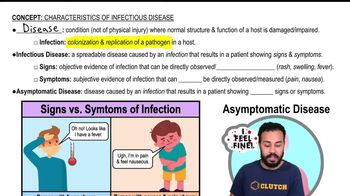
Intro to Characteristics of Infectious Disease