Ch. 24 - Microbial Diseases of the Respiratory System
Tortora - Microbiology: An Introduction 14th Edition
Tortora14th EditionMicrobiology: An IntroductionISBN: 9780138200398Not the one you use?Change textbook
Chapter 24, Problem 1

A patient has fever, difficulty breathing, chest pains, fluid in the pulmonary alveoli, and a positive tuberculin skin test. Gram-positive cocci are isolated from the sputum. The recommended treatment is
a. A macrolide.
b. Antitoxin.
c. Isoniazid.
d. Tetracyclines.
e. None of the above.

Verified step by step guidance
1
Step 1: Identify the clinical symptoms and signs described: fever, difficulty breathing, chest pains, fluid in the pulmonary alveoli, and a positive tuberculin skin test. These suggest a respiratory infection with possible tuberculosis exposure.
Step 2: Note that Gram-positive cocci were isolated from the sputum. Gram-positive cocci typically include bacteria such as Streptococcus pneumoniae or Staphylococcus aureus, which are common causes of bacterial pneumonia.
Step 3: Understand that a positive tuberculin skin test indicates prior exposure or latent infection with Mycobacterium tuberculosis, but the isolated organism causing the current infection is a Gram-positive coccus, not an acid-fast bacillus like Mycobacterium.
Step 4: Review the treatment options: isoniazid (choice c) is specific for tuberculosis (acid-fast bacilli), while macrolides (choice a) and tetracyclines (choice d) are antibiotics effective against certain Gram-positive cocci. Antitoxin (choice b) is used for toxin-mediated diseases like diphtheria, not typical pneumonia.
Step 5: Conclude that since the isolated pathogen is a Gram-positive coccus causing pneumonia symptoms, the recommended treatment would be an antibiotic effective against such bacteria, such as a macrolide, rather than antitoxin or isoniazid.

Verified video answer for a similar problem:

This video solution was recommended by our tutors as helpful for the problem above.
Video duration:
2m
Was this helpful?

Key Concepts

Here are the essential concepts you must grasp in order to answer the question correctly.

Tuberculin Skin Test and Tuberculosis

The tuberculin skin test detects immune response to Mycobacterium tuberculosis, indicating latent or active tuberculosis infection. A positive test suggests exposure but does not confirm active disease. Tuberculosis typically requires specific antibiotic treatment, such as isoniazid.
Recommended video:
Guided course
06:59
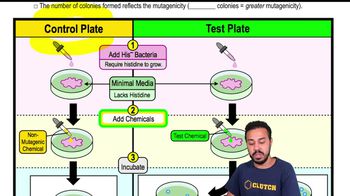
The Ames Test

Gram-Positive Cocci and Common Pathogens

Gram-positive cocci are spherical bacteria that stain purple in Gram staining. Common pathogens include Streptococcus pneumoniae and Staphylococcus aureus, often causing pneumonia and chest infections. Identifying the bacterial type guides appropriate antibiotic therapy.
Recommended video:
Guided course
02:59
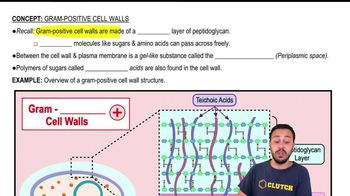
Gram-Positive Cell Walls

Antibiotic Selection Based on Pathogen and Clinical Presentation

Effective treatment depends on matching antibiotics to the causative organism and disease. Macrolides and tetracyclines target certain bacteria, while isoniazid specifically treats tuberculosis. Antitoxins neutralize toxins but do not kill bacteria, so choosing the right drug is critical.
Recommended video:
Guided course
06:43
Clonal Selection