Ch. 26 - Microbial Diseases of the Urinary and Reproductive Systems
Tortora - Microbiology: An Introduction 14th Edition
Tortora14th EditionMicrobiology: An IntroductionISBN: 9780138200398Not the one you use?Change textbook
Chapter 26, Problem 9

The most common cause of cystitis
a. C. trachomatis
b. E. coli
c. Mycobacterium hominis
d. S. saprophyticus

Verified step by step guidance
1
Understand that cystitis is an inflammation of the urinary bladder, commonly caused by bacterial infection.
Recall that the most frequent causative agent of cystitis is a bacterium that normally resides in the gastrointestinal tract but can ascend the urinary tract.
Evaluate the options given: C. trachomatis is primarily associated with sexually transmitted infections, Mycobacterium hominis is not a common urinary pathogen, and S. saprophyticus is a known cause but less common than the primary agent.
Identify that Escherichia coli (E. coli) is the most common cause of cystitis due to its prevalence in the gut flora and its ability to colonize the urinary tract.
Conclude that among the options, E. coli is the most common cause of cystitis.

Verified video answer for a similar problem:

This video solution was recommended by our tutors as helpful for the problem above.
Video duration:
2m
Was this helpful?

Key Concepts

Here are the essential concepts you must grasp in order to answer the question correctly.

Cystitis and Its Clinical Significance

Cystitis is an inflammation of the urinary bladder, commonly caused by bacterial infection. It presents with symptoms like frequent urination, urgency, and dysuria. Understanding cystitis is essential to identify its common causative agents and guide appropriate treatment.
Recommended video:
Guided course
03:59
Archaeal Cell Membranes

Escherichia coli as a Uropathogen

Escherichia coli is the most frequent cause of urinary tract infections, including cystitis. It originates from the intestinal flora and can colonize the urethra and bladder. Its virulence factors, such as fimbriae, facilitate adherence to urinary tract epithelium, leading to infection.
Recommended video:
Guided course
04:12
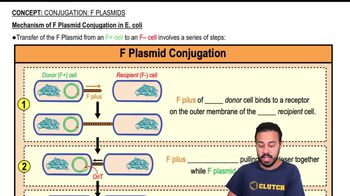
Mechanism of F Plasmid Conjugation in E. coli

Other Bacterial Causes of Cystitis

Besides E. coli, other bacteria like Staphylococcus saprophyticus can cause cystitis, especially in young sexually active women. Chlamydia trachomatis and Mycoplasma hominis are less common and typically associated with other urogenital infections rather than typical cystitis.
Recommended video:
Guided course
03:24
Lipid A Causes Septic Shock