What is the Acceptable Macronutrient Distribution Range (AMDR) for fat intake according to dietary guidelines?
The Acceptable Macronutrient Distribution Range (AMDR) for fat is 20-35% of total daily energy intake.
According to dietary guidelines, what proportion of daily calories should come from fat?
Dietary guidelines recommend that 20-35% of daily calories should come from fat.
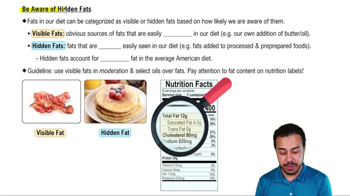
Why is it important to be aware of hidden fats in the diet, and what are some strategies for healthier fat consumption?
Hidden fats are often found in processed foods and can contribute significantly to total fat intake without being obvious. To consume healthier fats, use visible fats in moderation, choose unsaturated fats and liquid oils over saturated fats, and pay attention to nutrition labels.
What is the main difference between visible fats and hidden fats in the diet?
Visible fats are easily seen and include fats added during cooking or present in foods like bacon, while hidden fats are not obvious and are often found in processed or prepared foods. Hidden fats account for most of the fat consumed in the average American diet.
Why should you pay close attention to nutrition labels when managing fat intake?
Nutrition labels help you identify the amount and type of fat in foods, including hidden fats that may not be obvious. This awareness supports adherence to dietary guidelines for healthier fat consumption.
What is the recommended daily limit for saturated fat intake as a percentage of total energy?
Saturated fat intake should be limited to less than 10% of total daily energy intake. Exceeding this amount is linked to an increased risk of cardiovascular diseases.
Why is dietary cholesterol intake limited to less than 300 milligrams per day, even though it is not considered essential?
The limit is a precaution because foods high in cholesterol are often also high in saturated fats, which are linked to cardiovascular disease risk. The guideline helps reduce saturated fat intake indirectly.
What are the potential risks of using fat blockers for weight loss?
Fat blockers can inhibit the absorption of fat-soluble vitamins such as A, D, E, and K, potentially leading to malnutrition. Long-term use may also cause digestive side effects.
What dietary changes are recommended to increase intake of essential fatty acids?
Increase consumption of plant-based foods like dark leafy greens, nuts, seeds, and fish. These foods provide essential omega-3 and omega-6 fatty acids.
Why should trans fats be avoided in the diet according to dietary guidelines?
Trans fats significantly increase the risk of developing cardiovascular diseases. Foods like greasy cheeseburgers and fried items are common sources of trans fats.
 Back
Back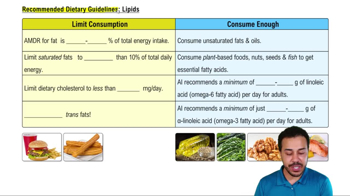
 04:37
04:37