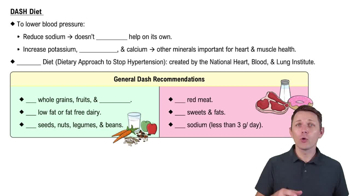
What is an important component of the DASH diet for managing hypertension?
An important component of the DASH diet is emphasizing the intake of whole grains, fruits, vegetables, low-fat dairy, and nuts, while minimizing sodium, red meat, and sweets.
Why is a low sodium diet typically prescribed for individuals with hypertension?
A low sodium diet is typically prescribed to help lower blood pressure, as high sodium intake increases blood volume and pressure, raising the risk of hypertension and cardiovascular disease.
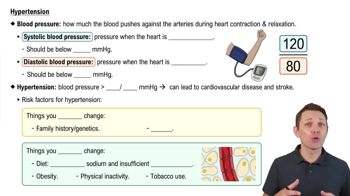
What do the systolic and diastolic numbers in a blood pressure reading represent?
Systolic is the pressure when the heart contracts, and diastolic is the pressure when the heart relaxes. Both are measured in millimeters of mercury.
At what blood pressure measurement is a person diagnosed with hypertension?
Hypertension is diagnosed when blood pressure is greater than 130 over 80 mmHg. This means either the systolic is above 130 or the diastolic is above 80.
How does excess sodium in the diet contribute to increased blood pressure?
Excess sodium increases blood volume by drawing water into the blood, making the heart work harder to push blood. This raises blood pressure over time.
What is the role of potassium in blood pressure regulation?
Potassium helps balance sodium's effects by keeping fluid inside cells and reducing blood volume. Adequate potassium intake can lower the risk of hypertension.
Which minerals, besides sodium and potassium, are emphasized in the DASH diet for heart health?
Magnesium and calcium are also emphasized in the DASH diet. Both are important electrolytes for heart and muscle function.
What is the average daily sodium intake for Americans compared to DASH diet recommendations?
The average American consumes about 3,400 mg of sodium daily. The DASH diet recommends less than 2,300 mg per day.
How does physical inactivity influence the risk of developing hypertension?
Physical inactivity increases the risk of hypertension by weakening the heart and blood vessels. Regular activity can help lower blood pressure.
Why might diuretics be prescribed to someone with hypertension?
Diuretics help lower blood pressure by increasing urine output, which reduces blood volume. This makes it easier for the heart to pump blood.
 Back
Back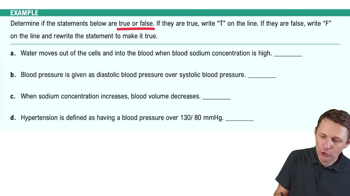
 02:08
02:08