What is the primary form of fat found in the diet?
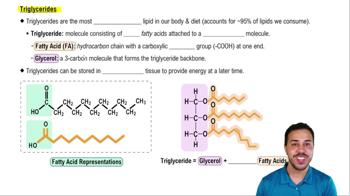
The primary form of fat in the diet is triglycerides, which consist of three fatty acids attached to a glycerol molecule.
Which type of lipid stores calories for future use in the body?
Triglycerides store calories for future use by being stored in adipose tissue, where they can provide energy when needed.
What property do all lipids share that affects their interaction with water?
All lipids are hydrophobic, meaning they do not mix well with water. This property causes lipids to separate from water in mixtures.
How do fats and oils differ in their physical state at room temperature?
Fats are solid at room temperature, while oils are liquid at room temperature. This distinction is based on their molecular structure and saturation.
What structural feature makes phospholipids amphipathic?
Phospholipids have both hydrophobic fatty acid tails and a hydrophilic phosphate-containing head. This dual nature allows them to interact with both water and lipids.
Why are phospholipids important for cell membranes?
Phospholipids form the main structure of cell membranes due to their amphipathic nature. Their hydrophilic heads face outward toward water, while hydrophobic tails face inward, creating a barrier.
Are phospholipids considered essential nutrients in the human diet?
Phospholipids are not essential in the diet because the body can synthesize them. However, the phosphorus in their phosphate group is essential.
What is the most common sterol found in animal-based foods?
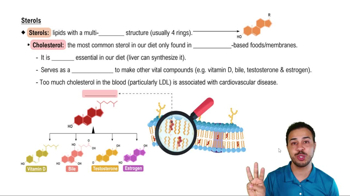
Cholesterol is the most common sterol found in animal-based foods and membranes. It is not present in plant-based foods.
What are two major functions of cholesterol in the body?
Cholesterol helps regulate membrane fluidity and rigidity and serves as a precursor for vitamin D, bile, and sex hormones. These functions are vital for cellular and hormonal health.
Why is dietary cholesterol not considered essential for humans?
Dietary cholesterol is not essential because the liver can synthesize all the cholesterol the body needs. Therefore, it is unnecessary to obtain cholesterol from food.
 Back
Back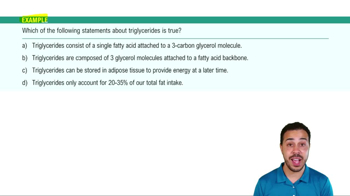
 01:36
01:36