Back

Major Mineral: Calcium and Phosphorus quiz #1

Control buttons has been changed to "navigation" mode.
1/10
  • What is the most abundant mineral in the human body, and what are its primary functions?

    Calcium is the most abundant mineral in the human body. Its primary functions include forming hydroxyapatite with phosphorus to strengthen bones and teeth, acting as an electrolyte essential for muscle contraction, nerve signaling, and maintaining blood pressure.
  • Which plant compounds can limit calcium absorption from foods like spinach?

    Oxalates and phytates are plant compounds that bind to calcium and reduce its absorption. Spinach is especially high in oxalates, making its calcium less bioavailable.
  • What hormone does the thyroid gland release when blood calcium levels are too high?

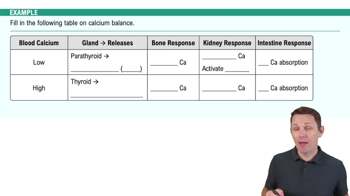
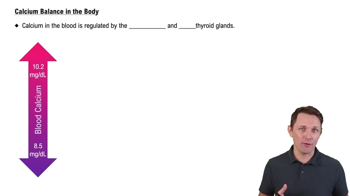
    The thyroid gland releases calcitonin when blood calcium is too high. Calcitonin signals bones to take up calcium, kidneys to excrete it, and intestines to decrease absorption.
  • How does parathyroid hormone (PTH) help increase blood calcium levels?

    PTH is released by the parathyroid glands when calcium is low and signals bones to release calcium. It also activates vitamin D in the kidneys, which increases calcium absorption in the intestines.
  • What is the recommended dietary allowance (RDA) for phosphorus in adults?

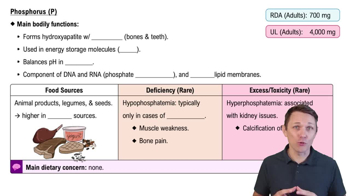
    The RDA for phosphorus in adults is 700 milligrams per day. The tolerable upper limit is 4,000 milligrams per day.
  • What are the main food sources of phosphorus?

    Phosphorus is abundant in animal products, legumes, and seeds. Animal sources generally contain the highest levels.
  • What condition results from chronic calcium deficiency and what are its consequences?

    Chronic calcium deficiency leads to hypocalcemia, which can cause poor bone development in children and osteoporosis in older adults. Osteoporosis increases the risk of bone fractures.
  • What are the symptoms of hypophosphatemia and when does it typically occur?

    Hypophosphatemia, or low phosphorus, causes muscle weakness and bone pain. It typically occurs only in cases of starvation.
  • What can happen if phosphorus levels become excessively high due to kidney problems?

    Excess phosphorus, or hyperphosphatemia, can lead to calcification of soft tissues. This usually occurs when kidney function is impaired and phosphorus is not properly filtered.
  • Why is vitamin D important for calcium absorption?

    Vitamin D is essential for absorbing calcium in the intestines. Without enough vitamin D, calcium absorption is reduced, affecting bone health.