Back

Major Mineral: Chloride, Magnesium, & Sulfur quiz #1

Control buttons has been changed to "navigation" mode.
1/10
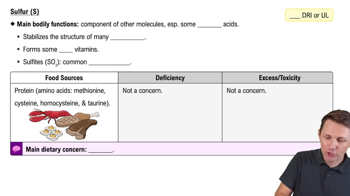
  • Which major mineral is found in proteins and helps stabilize their structure?

    Sulfur is the major mineral found in proteins, as it is a component of certain amino acids and helps stabilize the three-dimensional structure of many proteins.
  • What role does chloride play in maintaining blood pH?

    Chloride acts as a buffer in the blood, helping to keep blood pH within a narrow range. This buffering capacity is essential for proper physiological function.
  • Why is chloride intake closely linked to sodium intake?

    Chloride is primarily consumed as part of sodium chloride (table salt), so limiting sodium also limits chloride intake. This connection is important because excess sodium is associated with hypertension risk.
  • What is the main source of dietary chloride?

    The main source of dietary chloride is table salt, which is sodium chloride. Most chloride in the diet comes from foods containing added salt.
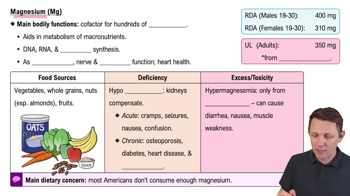
  • What symptoms might occur with acute magnesium deficiency?

    Acute magnesium deficiency can result in cramps, seizures, nausea, and confusion. These symptoms are related to magnesium's role in nerve and muscle function.
  • How do the kidneys help regulate magnesium levels in the body?

    The kidneys are very good at retaining magnesium when levels are low and excreting excess magnesium when levels are high. This regulation helps prevent acute deficiencies.
  • What is the tolerable upper intake level for magnesium from supplements, and why is it important?

    The tolerable upper intake level for magnesium from supplements is 350 mg per day. Exceeding this amount can cause diarrhea, nausea, and muscle weakness.
  • Which foods are especially high in magnesium?

    Vegetables, whole grains, nuts (especially almonds), and fruits are especially high in magnesium. These nutrient-dense plant foods are recommended for adequate intake.
  • What is the main dietary concern regarding sulfur intake?

    There is no main dietary concern for sulfur intake because deficiencies and toxicities are not a risk. Consuming a normal diet provides sufficient sulfur.
  • Which amino acids are notable for containing sulfur?

    Methionine, cysteine, homocysteine, and taurine are notable amino acids that contain sulfur. These amino acids are found in protein-rich foods.