Back

Other Trace Minerals quiz #1

Control buttons has been changed to "navigation" mode.
1/10
  • What is a trace mineral, and can you name examples of trace minerals discussed in nutrition?

    A trace mineral is a mineral required by the body in very small amounts, typically less than 100 mg per day. Examples of trace minerals include zinc, selenium, manganese, chromium, and molybdenum.
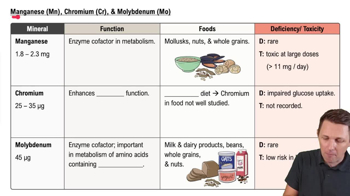
  • Which trace mineral enhances insulin activity in the body?

    Chromium is the trace mineral that enhances insulin activity, helping the body store and regulate glucose.
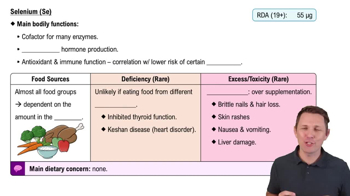
  • Which trace mineral acts as an antioxidant and is important for thyroid hormone production?

    Selenium acts as an antioxidant and is important for thyroid hormone production.
  • Among the trace minerals discussed, which one has the smallest daily requirement for adults?

    Chromium and molybdenum have very small daily requirements, with molybdenum requiring only 45 micrograms per day and chromium requiring 25-35 micrograms per day. These are among the smallest daily requirements for trace minerals.
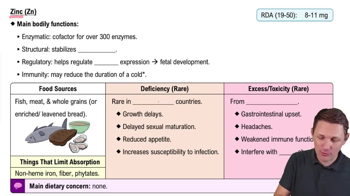
  • What are the main functions of zinc as a trace mineral in the human body?

    Zinc acts as a cofactor for over 300 enzymes, plays roles in metabolism, gene expression, immune function, and stabilizes certain proteins.
  • How does the presence of phytates in unleavened bread affect zinc absorption?

    Phytates in unleavened bread bind to zinc and inhibit its absorption in the gut. This can lead to zinc deficiency even if dietary intake is adequate.
  • What are some symptoms of zinc toxicity from over-supplementation?

    Symptoms of zinc toxicity include gastrointestinal upset, headaches, weakened immune function, and interference with iron absorption. These effects are rare and usually result from excessive supplement use.
  • Why is selenium deficiency uncommon in modern societies?

    Selenium deficiency is uncommon because most people consume foods sourced from various regions, ensuring adequate selenium intake. Deficiency is mainly seen in areas with low soil selenium and limited food variety.
  • What is Keishan disease and how is it related to selenium?

    Keishan disease is a heart disorder linked to selenium deficiency, named after a region in China with low soil selenium. It occurs in populations relying on local foods grown in selenium-poor soil.
  • Which food sources are particularly rich in manganese?

    Manganese is found in mollusks such as mussels and snails, as well as in nuts and whole grains. These foods provide the recommended daily intake of manganese.