Which mineral is essential for strengthening and repairing tooth enamel, and how does it help prevent dental caries?
Fluoride is essential for strengthening and repairing tooth enamel. It enhances the mineralization of teeth and protects against acids and bacteria, thereby preventing dental caries (cavities).
A deficiency in which mineral can lead to the development of a goiter, and what is the underlying cause?
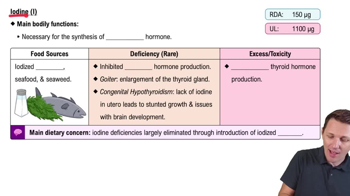
A deficiency in iodine can lead to the development of a goiter. This occurs because iodine is necessary for thyroid hormone synthesis, and without enough iodine, the thyroid gland enlarges in an attempt to compensate for reduced hormone production.
Which mineral is required for the production of thyroid hormones, and what are common dietary sources?
Iodine is required for the production of thyroid hormones. Common dietary sources include iodized salt, seafood, and seaweed.
How can fluoride be absorbed by the body aside from ingestion through the intestines?
Fluoride can be absorbed directly by the teeth and gums when present in the mouth. This is why it is included in many dental products that are not meant to be swallowed.
What is the recommended daily allowance (RDA) for fluoride, and how does it compare to typical food sources?
The RDA for fluoride is 3-4 milligrams per day. Typical food sources are generally poor in fluoride, making fluorinated water and dental products more important.
Why might individuals who primarily drink bottled or well water need to be more mindful of their fluoride intake?
Bottled and well water usually do not contain added fluoride, unlike most municipal tap water. People relying on these sources may need to seek fluoride from other means to protect their dental health.
What are the cosmetic and potential skeletal effects of excessive fluoride intake?
Excessive fluoride can cause fluorosis, leading to porous, pitted, and discolored teeth, which is mainly a cosmetic issue. In more extreme cases, it can also increase bone mass and stiffness.
What is the difference between iodized salt and specialty salts like kosher or Himalayan salt regarding iodine content?
Iodized salt contains added iodine, which helps prevent deficiency. Specialty salts such as kosher, sea salt, or Himalayan salt typically do not contain added iodine.
What is congenital hypothyroidism, and how is it related to iodine intake during pregnancy?
Congenital hypothyroidism occurs when a fetus does not receive enough iodine due to maternal deficiency. This can result in stunted growth and brain development issues in the child.
What is the tolerable upper limit for iodine intake, and how is it most likely to be exceeded?
The tolerable upper limit for iodine is 1,100 micrograms (1.1 milligrams) per day. It is most likely to be exceeded through supplements rather than normal food sources.
 Back
Back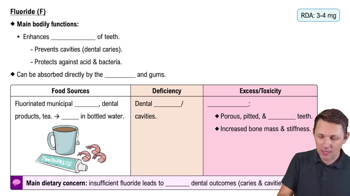
 03:09
03:09