Back

Water quiz #1

Control buttons has been changed to "navigation" mode.
1/10
  • Does drinking cold water significantly increase calorie burning compared to drinking room-temperature water?

    Drinking cold water does not significantly increase calorie burning compared to room-temperature water. While the body uses a small amount of energy to warm cold water to body temperature, the effect is minimal and does not meaningfully impact overall calorie expenditure.
  • What is the primary factor that determines the percentage of water in a person's body?

    Body composition is the primary factor, as muscle tissue contains more water than fat tissue. People with higher muscle mass have a higher percentage of body water.
  • Where is most of the water in the human body located?

    Most of the water is found in the intracellular fluid, which is inside the cells. This compartment contains about two-thirds of the body's total water.
  • What is the main function of water as a universal solvent in the body?

    Water dissolves substances so that cellular functions can occur. Most biochemical reactions in the body take place in water-filled environments.
  • How does osmosis help regulate water movement in and out of cells?

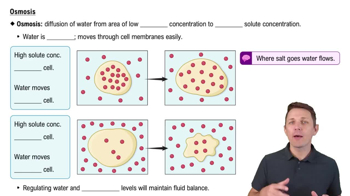
    Osmosis causes water to move from areas of low solute concentration to areas of high solute concentration. This process helps balance fluid levels inside and outside cells.
  • What is hyponatremia and what can cause it?

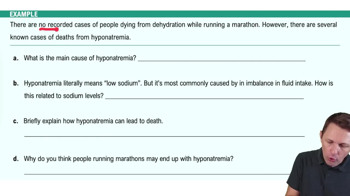
    Hyponatremia is a condition where there is not enough sodium in the extracellular fluid, often caused by drinking excessive amounts of water. It can lead to dangerous brain swelling and, in severe cases, death.
  • Which populations are at increased risk of dehydration and why?

    Infants and the elderly are at increased risk of dehydration. This is because they may have difficulty maintaining proper fluid intake or regulating fluid loss.
  • What role does the hypothalamus play in fluid balance?

    The hypothalamus monitors blood sodium and blood volume to regulate thirst and the release of antidiuretic hormone (ADH). This helps maintain proper hydration by adjusting fluid intake and retention.
  • Why is the recommendation to drink eight glasses of water per day considered a myth?

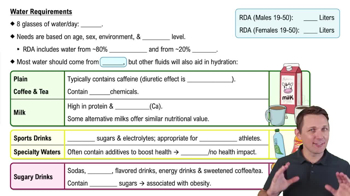
    The eight-glass rule does not account for individual needs, glass size, or water from food. Actual water requirements vary by sex, age, environment, and activity level.
  • How do beverages like coffee and tea contribute to hydration despite containing caffeine?

    Coffee and tea have a minimal diuretic effect, so they still count toward daily hydration. They also contain phytochemicals that may offer additional health benefits.