What is required for absorption of fat-soluble vitamins?
They require bile and dietary fat for absorption.
How are fat-soluble vitamins transported in the body?
They are transported with fats through the lymphatic system in chylomicrons before entering the blood.
Where are fat-soluble vitamins stored in the body?
They are stored in body fat and are not easily excreted.
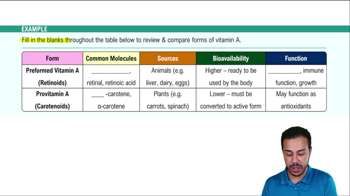
What are the two forms of Vitamin A found in the diet?
Vitamin A is found as preformed vitamin A from animal products and as precursor carotenoids from plant foods.
What are retinoids and carotenoids in relation to Vitamin A?
Retinoids are preformed vitamin A (retinol, retinal, retinoic acid), while carotenoids are plant pigments some of which are vitamin A precursors like beta-carotene.
What is the key role of Vitamin A in vision?
Vitamin A is part of rhodopsin, a visual pigment essential for night vision.
What are symptoms of Vitamin A deficiency?
Symptoms include xerophthalmia (night blindness), abnormal jaw growth in children, and increased infections.
What are risks of Vitamin A toxicity?
Excess Vitamin A can cause nausea, vomiting, headache, dizziness, blurred vision, birth defects, liver damage, and bone fractures.
How does Vitamin A affect gene expression?
Vitamin A regulates gene expression involved in cell differentiation and growth, ensuring healthy eyes and epithelial tissue.
How is Vitamin D synthesized in the body?
Vitamin D is made in the skin with exposure to ultraviolet (UV) light and activated in the liver and kidneys.
What is the main function of Vitamin D?
Vitamin D maintains normal blood levels of calcium and phosphorus essential for bone health and muscle function.
What happens when blood calcium is low in relation to Vitamin D?
Low calcium stimulates parathyroid hormone (PTH) release, which activates Vitamin D to increase calcium absorption.
What are symptoms of Vitamin D deficiency?
Deficiency causes rickets in children (bowed legs) and osteomalacia in adults (soft bones and muscle pain).
What are sources of Vitamin D in the diet?
Sources include liver, egg yolks, oily fish (e.g., salmon), and fortified foods.
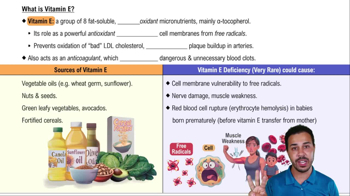
What is the main antioxidant form of Vitamin E absorbed by the body?
The main form is alpha-tocopherol.
What is the primary function of Vitamin E?
Vitamin E acts as an antioxidant protecting lipids in cell membranes and lipoproteins.
What are symptoms of Vitamin E deficiency?
Deficiency can cause hemolytic anemia in infants and rare nerve damage in adults.
What is the role of Vitamin K in the body?
Vitamin K is essential for synthesis of blood-clotting proteins and proteins involved in bone formation.
What causes Vitamin K deficiency symptoms?
Deficiency leads to abnormal blood clotting, bruising, uncontrolled bleeding, and reduced bone density.
How does warfarin affect Vitamin K function?
Warfarin inhibits the formation of active Vitamin K, preventing blood clotting.
 Back
Back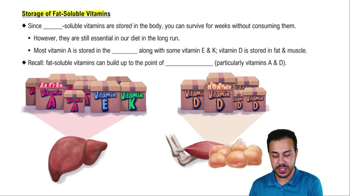
 01:33
01:33