 Back
BackWater and Electrolyte Balance in Nutrition
 05:47
05:47
Terms in this set (20)
Approximately 62% of body weight in a lean adult male is water.
Water acts as a solvent dissolving substances, while solutes are the dissolved substances; together they form a solution.
Water functions in transport (blood, urine), lubrication (tears, saliva), and temperature regulation due to its high heat capacity.
Intracellular fluid has high potassium and low sodium; extracellular fluid has high sodium and chloride, and low potassium.
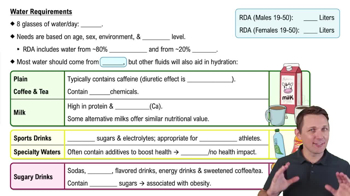
Water intake comes from beverages (75-80%), food (20-25%), and metabolic water (about 10%).
Water is lost via urine (1-2L/day), feces, insensible losses (skin and lungs), and sweat.
Kidneys filter blood, reabsorb needed substances, and excrete unneeded substances in urine to maintain water balance.
Thirst is triggered by decreased blood volume and increased solute concentration, signaling the hypothalamus.
ADH is secreted by the pituitary gland to increase water reabsorption in kidneys, restore blood pressure, and stimulate thirst.
Dehydration causes reduced blood volume, leading to heat exhaustion, cramps, dizziness, and potentially heat stroke.
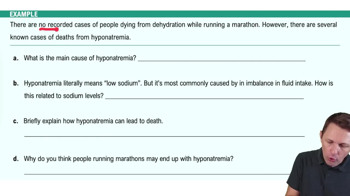
Hyponatremia is low blood sodium caused by excessive water intake diluting sodium, leading to tissue swelling (edema).
AI for water is 3.7 L/day for males and 2.7 L/day for females, with increased needs during activity, heat, or high salt intake.
They regulate fluid balance, nerve conduction, muscle contraction, and blood pressure.
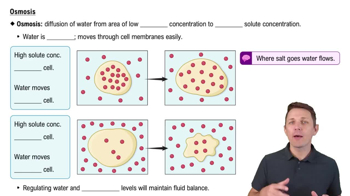
High salt intake increases blood sodium, which stimulates thirst and water intake to dilute sodium levels.
Processed foods contribute about 77% of sodium intake; natural sources and added salt contribute the rest.
Reducing sodium intake to less than 2300 mg/day can reduce hypertension by 30% and cardiovascular disease by 13%.
AI for potassium is 4700 mg/day for adults; best sources are fresh fruits and vegetables.
Deficiency causes muscle cramps and irregular heartbeat; excess (hyperkalemia) can cause abnormal heartbeat.
Electrolytes control fluid movement by osmosis and active transport via transport proteins across cell membranes.
Labels use terms like "sodium-free" (<5 mg/serving), "low sodium" (≤140 mg/serving), and "reduced sodium" (≥25% less sodium).