Vitamins are organic, micronutrients essential in small amounts, not energy-yielding, and classified as water-soluble or fat-soluble. They act as cofactors in cell functions.
Which vitamins are water-soluble?
Water-soluble vitamins include Vitamin C and the B vitamins: Thiamin (B1), Riboflavin (B2), Niacin (B3), Pantothenic acid, Pyridoxine (B6), Biotin, Folate (B9), and Cobalamin (B12).
How do water-soluble vitamins differ from fat-soluble vitamins in absorption and storage?
Water-soluble vitamins dissolve in water, are easily absorbed and excreted, and are not stored extensively. Fat-soluble vitamins dissolve in lipids, require bile for absorption, are transported in lymph, and stored in tissues.
What is the difference between fortification and enrichment of foods?
Fortification adds nutrients not naturally present (e.g., calcium in orange juice). Enrichment adds back nutrients lost during processing (e.g., B vitamins in white rice).
Who may benefit from vitamin supplements?
People on calorie-restricted diets, vegans, infants, children, pregnant women, individuals with dark skin or limited sun exposure, medication users, smokers, and alcohol users.
What factors affect vitamin bioavailability?
Bioavailability depends on digestion efficiency, GI transit time, nutrition status, other foods consumed, food preparation, and nutrient source (synthetic, fortified, natural).
What are provitamins or precursors?
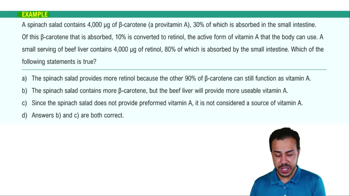
Inactive forms of vitamins in foods that the body converts to active forms, e.g., provitamin A (β-carotene) converted to retinol (vitamin A).
What is the primary function of Thiamin (Vitamin B1)?
Thiamin is a coenzyme needed for glucose breakdown to provide energy, metabolism of sugars and amino acids, synthesis of ribose and deoxyribose, and nerve function.
What are the symptoms of Thiamin deficiency?
Beriberi causes weakness, nerve degeneration, heart changes; Wernicke-Korsakoff syndrome in alcoholics causes mental confusion, psychosis, memory loss, and coma.
What are the main functions of Riboflavin (Vitamin B2)?
Riboflavin forms coenzymes for ATP production from carbs, fats, proteins, has antioxidant properties, and helps activate other vitamins like folate and niacin.
What are the symptoms of Riboflavin deficiency?
Poor wound healing, cracked lips, sensitivity to light, eye burning and tearing, and skin flaking around nose and ears.
What is Niacin's role in the body?
Niacin is a coenzyme in glucose metabolism, fatty acid and cholesterol synthesis, and helps maintain energy production.
What are the symptoms of Niacin deficiency?
Pellagra characterized by fatigue, decreased appetite, indigestion, and the 4 Ds: dermatitis, diarrhea, dementia, and death.
What is Biotin's function and dietary source?
Biotin acts as a coenzyme in the citric acid cycle and glucose synthesis; found in liver, egg yolks, yogurt, and nuts.
What is Pantothenic acid's role in metabolism?
Pantothenic acid is part of coenzyme A, essential for cholesterol and fatty acid synthesis.
What are the functions of Vitamin B6?
Vitamin B6 is involved in amino acid and protein metabolism, neurotransmitter synthesis, hemoglobin production, and conversion of tryptophan to niacin.
What are the symptoms of Vitamin B6 deficiency?
Poor growth, skin lesions, decreased immunity, anemia, and neurological symptoms like anxiety and nightmares.
What is the importance of Folate (Vitamin B9) during pregnancy?
Folate is essential for DNA synthesis and neural tube formation, preventing birth defects like spina bifida.
What are the functions of Vitamin B12 (Cobalamin)?
Vitamin B12 is needed for ATP production from fatty acids, homocysteine conversion, myelin maintenance, and amino acid metabolism.
What causes Vitamin B12 deficiency and its symptoms?
Caused by pernicious anemia, GI disorders, or vegan diets; symptoms include anemia, numbness, memory loss, disorientation, and paralysis.
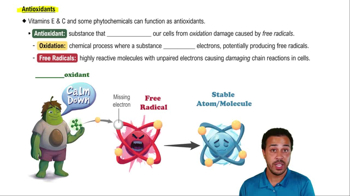
What are antioxidants and their role?
Antioxidants neutralize free radicals by donating electrons, preventing damage to DNA and other molecules, reducing oxidative stress linked to diseases.
What are the functions of Vitamin C (Ascorbic Acid)?
Vitamin C acts as an antioxidant, supports collagen synthesis, neurotransmitter and hormone production, regenerates Vitamin E, and enhances iron absorption.
What are the symptoms of Vitamin C deficiency?
Scurvy, characterized by gum and tooth problems, joint pain, bleeding, poor wound healing, fatigue, and depression.
What is Choline and its importance?
Choline is a water-soluble essential nutrient needed for acetylcholine synthesis, cell membrane function, lipid transport, and homocysteine metabolism.
What are the symptoms of Choline deficiency?
During pregnancy, deficiency can impair fetal brain development; in adults, it causes fatty liver and muscle damage.
 Back
Back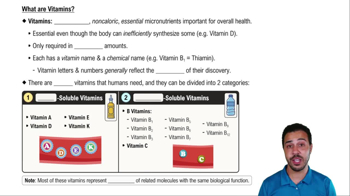
 05:25
05:25