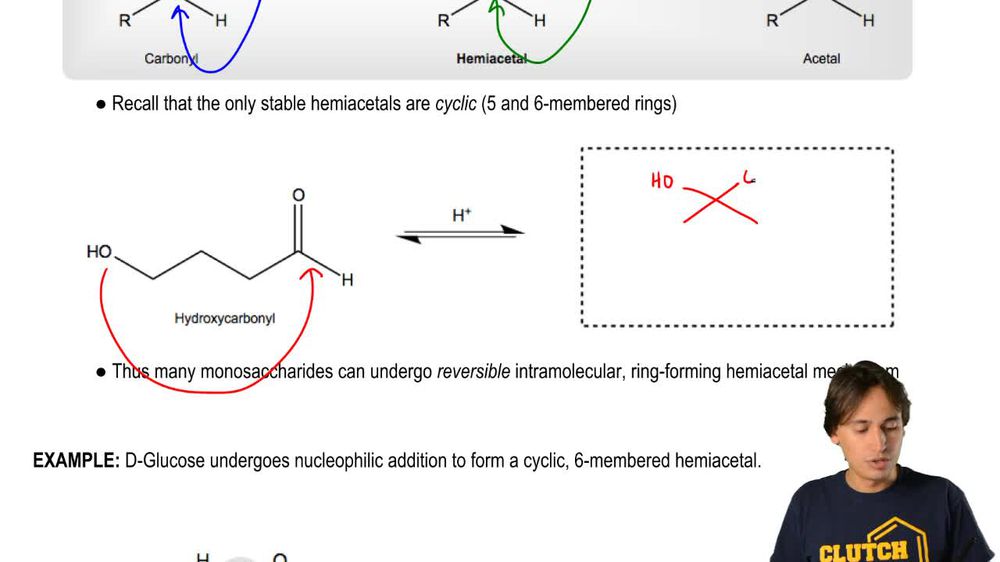
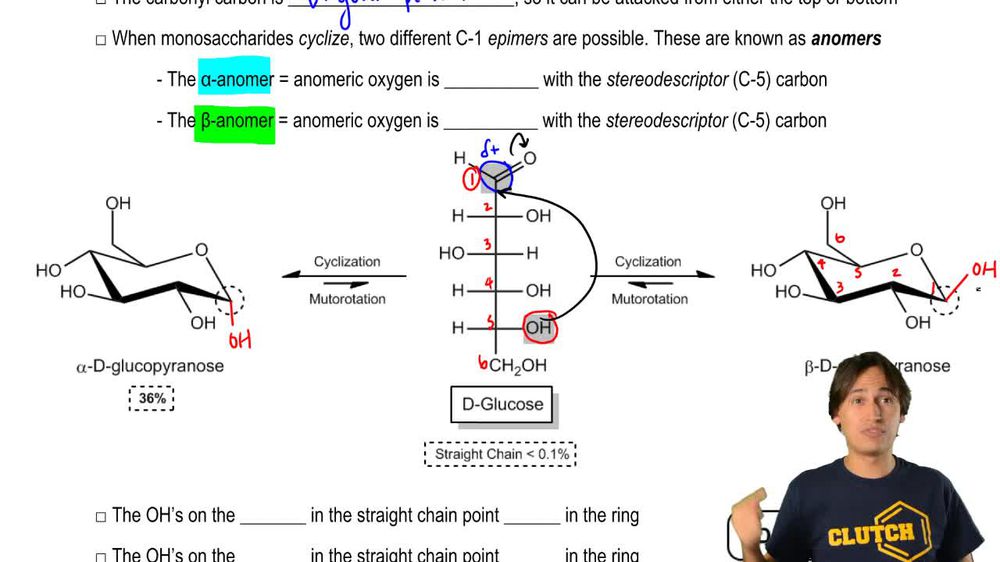
Figure 23-2 shows that the degradation of D-glucose gives D-arabinose, an aldopentose. Arabinose is most stable in its furanose form. Draw D-arabinofuranose.
Verified step by step guidance
1
Understand the problem: The degradation of D-glucose to D-arabinose involves the loss of one carbon atom, resulting in an aldopentose (a five-carbon sugar with an aldehyde group). The problem asks us to draw D-arabinofuranose, the furanose form of D-arabinose.
Recall the furanose form: A furanose is a five-membered ring structure formed when the hydroxyl group on the penultimate carbon (C-4 in this case) reacts with the aldehyde group on C-1, creating a cyclic hemiacetal.
Determine the stereochemistry: D-arabinose is a D-sugar, meaning the hydroxyl group on the penultimate carbon (C-4) is on the right in the Fischer projection. This stereochemistry must be preserved in the furanose form.
Draw the ring structure: Start by drawing a five-membered ring (furanose). Place the oxygen atom as one of the ring members. Attach the aldehyde-derived carbon (C-1) and the penultimate carbon (C-4) to the ring, ensuring the correct stereochemistry for the hydroxyl groups on C-2, C-3, and C-4.
Add substituents: Place the hydroxyl groups and hydrogen atoms on the appropriate carbons in the ring, ensuring the stereochemistry matches that of D-arabinose. The hydroxyl group on C-1 will be part of the hemiacetal linkage, and the remaining hydroxyl groups should be positioned according to the D-arabinose configuration.
Verified video answer for a similar problem:
This video solution was recommended by our tutors as helpful for the problem above
Video duration:
4m
Play a video:
0 Comments
Key Concepts
Here are the essential concepts you must grasp in order to answer the question correctly.
Aldopentose Structure
Aldopentoses are monosaccharides that contain five carbon atoms and an aldehyde functional group. D-arabinose, specifically, is an aldopentose with a specific configuration at each chiral center. Understanding the structure of aldopentoses is crucial for recognizing their properties and reactivity in biochemical processes.
The furanose form refers to a cyclic structure of sugars that resembles a five-membered ring, typically formed when a hydroxyl group reacts with the carbonyl group. In the case of D-arabinose, the furanose form is the most stable configuration, which influences its chemical behavior and interactions in biological systems.
Cyclization is the process by which linear forms of sugars convert into cyclic structures, significantly affecting their stability and reactivity. This transformation involves the nucleophilic attack of a hydroxyl group on the carbonyl carbon, leading to the formation of either pyranose (six-membered) or furanose (five-membered) rings, which are essential for understanding carbohydrate chemistry.

 4:26 minutes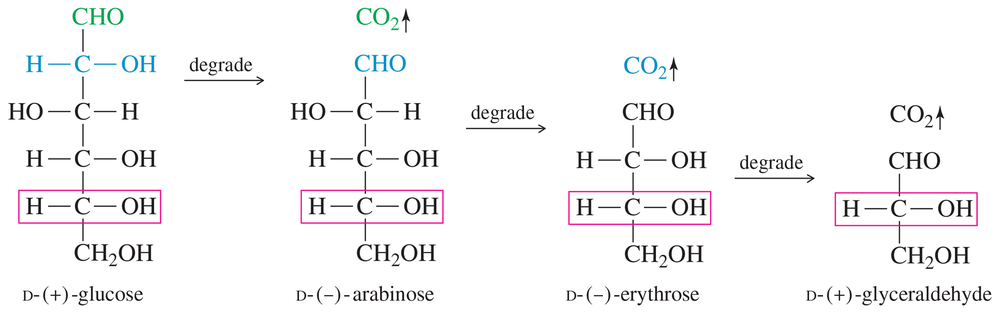
 Verified step by step guidance
 03:04
03:04