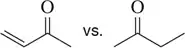
Based on the analysis you used in Assessment 17.3, which carbonyl would you expect to react most quickly with a nucleophile? (c)
Verified step by step guidance
1
Analyze the two carbonyl compounds provided in the image. The first compound has an alkene group adjacent to the carbonyl, while the second compound has an alkyl group adjacent to the carbonyl.
Understand the concept of electronic effects. The alkene group in the first compound can exert a conjugative effect (resonance) with the carbonyl group, stabilizing the partial positive charge on the carbonyl carbon. This makes the carbonyl less electrophilic and less reactive toward nucleophiles.
Compare steric effects. The alkyl group in the second compound is bulkier than the alkene group in the first compound, which can hinder nucleophilic attack due to steric hindrance. However, steric effects are secondary to electronic effects in this case.
Determine the reactivity of the carbonyl groups. The carbonyl in the second compound is more electrophilic because it lacks the conjugative stabilization present in the first compound. This makes it more reactive toward nucleophiles.
Conclude that the carbonyl in the second compound (with the alkyl group) would react more quickly with a nucleophile compared to the carbonyl in the first compound (with the alkene group).
Verified video answer for a similar problem:
This video solution was recommended by our tutors as helpful for the problem above
Play a video:
0 Comments
Key Concepts
Here are the essential concepts you must grasp in order to answer the question correctly.
Nucleophilic Addition to Carbonyls
Nucleophilic addition is a fundamental reaction in organic chemistry where a nucleophile attacks the electrophilic carbon of a carbonyl group (C=O). The reactivity of carbonyl compounds varies based on the substituents attached to the carbonyl carbon, influencing the electron density and steric hindrance. Understanding this concept is crucial for predicting which carbonyl compound will react more quickly with a nucleophile.
The electrophilicity of a carbonyl carbon is determined by the partial positive charge it carries due to the electronegativity of the oxygen atom. Factors such as resonance and inductive effects from substituents can either stabilize or destabilize this positive charge, affecting the carbonyl's reactivity. A more electrophilic carbonyl will react faster with nucleophiles, making this concept essential for analyzing the question.
Steric hindrance refers to the repulsion between atoms that occurs when they are brought close together, which can impede reactions. In the context of carbonyl compounds, bulky groups near the carbonyl can hinder the approach of nucleophiles, slowing down the reaction. Evaluating the steric environment around the carbonyl is vital for determining which compound will react more quickly with a nucleophile.

 Verified step by step guidance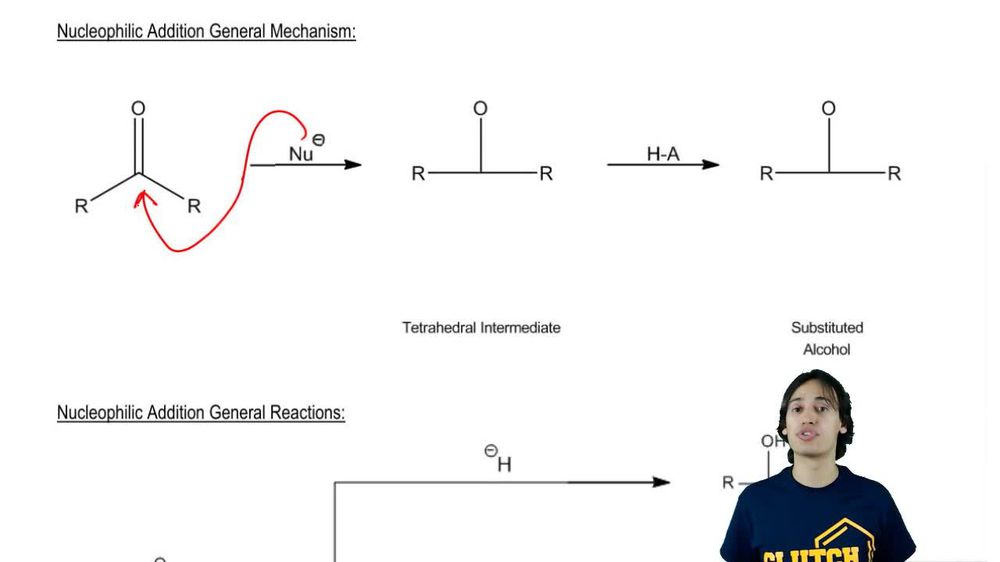
 08:27
08:27