In each Diels–Alder reaction shown, predict the product that will result.(a)
Verified step by step guidance
1
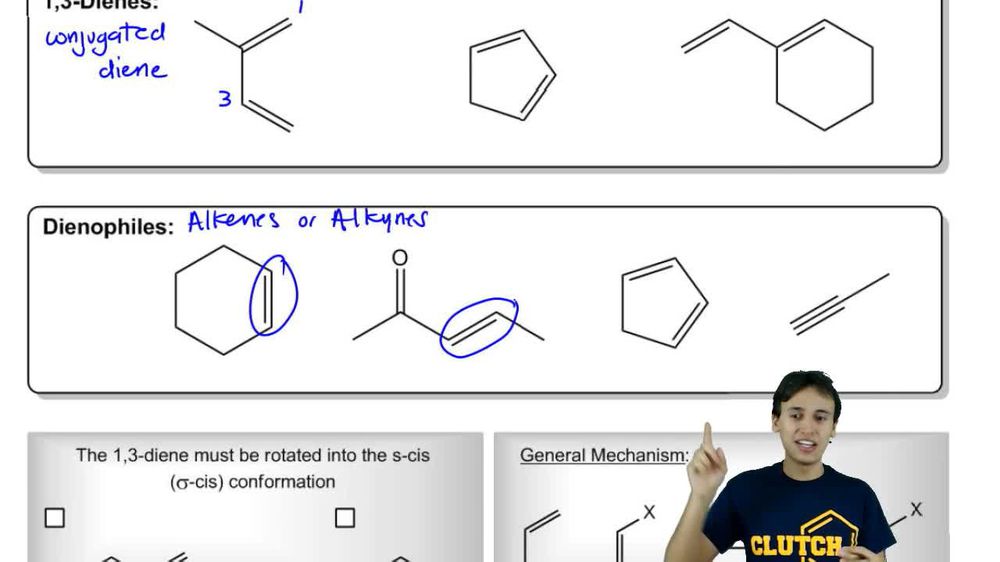
Identify the diene and the dienophile in the reaction. The diene should have conjugated double bonds, and the dienophile typically has an electron-withdrawing group.
Consider the stereochemistry of the diene and dienophile. If the diene is in the s-cis conformation, it can participate in the reaction. The dienophile's substituents will affect the stereochemistry of the product.
Draw the cyclic transition state of the Diels–Alder reaction. This involves a concerted movement of electrons, forming a six-membered ring.
Predict the regiochemistry of the product. Consider the electron-withdrawing and electron-donating groups on the diene and dienophile to determine the major product.
Draw the final product, ensuring to show the correct stereochemistry and regiochemistry as determined in the previous steps.
Verified video answer for a similar problem:
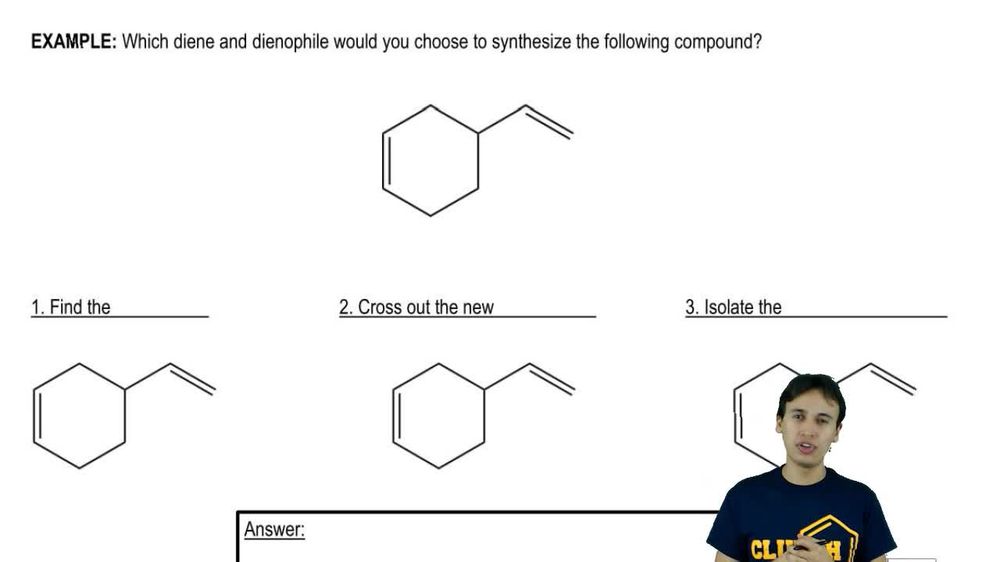
This video solution was recommended by our tutors as helpful for the problem above
Video duration:
1m
Play a video:
0 Comments
Key Concepts
Here are the essential concepts you must grasp in order to answer the question correctly.
Diels–Alder Reaction
The Diels–Alder reaction is a [4+2] cycloaddition reaction between a conjugated diene and a dienophile, resulting in the formation of a six-membered ring. This reaction is a key method in organic synthesis for constructing cyclic compounds and is characterized by its stereospecificity and regioselectivity, meaning the orientation of substituents in the product can be predicted based on the structure of the reactants.
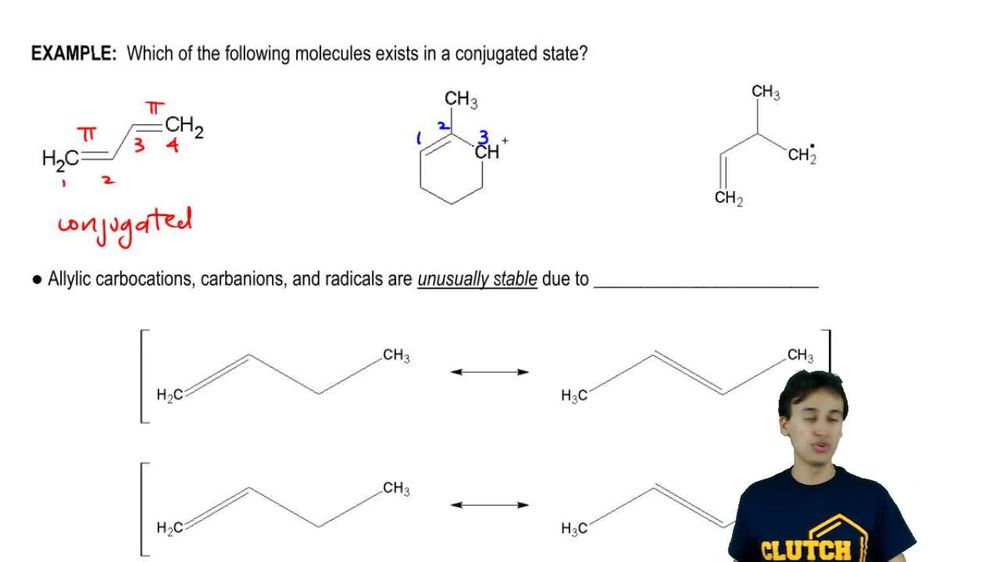
Conjugated dienes are compounds that contain two double bonds separated by a single bond, allowing for delocalization of π electrons. This delocalization enhances the stability of the diene and makes it more reactive in Diels–Alder reactions. Understanding the structure and reactivity of conjugated dienes is crucial for predicting the outcomes of these reactions.
A dienophile is an electron-deficient alkene or alkyne that reacts with a diene in a Diels–Alder reaction. The reactivity of the dienophile is influenced by its substituents; electron-withdrawing groups increase its reactivity, while electron-donating groups decrease it. Recognizing the nature of the dienophile is essential for predicting the product of the Diels–Alder reaction.