The same alkane is obtained from the catalytic hydrogenation of both alkene A and alkene B. The heat of hydrogenation of alkene A is 29.8 kcal/mol, and the heat of hydrogenation of alkene B is 31.4 kcal/mol. Which alkene is more stable?
Verified step by step guidance
1
Understand the concept of heat of hydrogenation: The heat of hydrogenation is the amount of energy released when an alkene undergoes catalytic hydrogenation to form an alkane. A lower heat of hydrogenation indicates a more stable alkene because less energy is released during the reaction.
Compare the given heats of hydrogenation: Alkene A has a heat of hydrogenation of 29.8 kcal/mol, while alkene B has a heat of hydrogenation of 31.4 kcal/mol. This means that alkene A releases less energy during hydrogenation compared to alkene B.
Relate heat of hydrogenation to stability: Since alkene A releases less energy, it is more stable than alkene B. This is because a more stable alkene has a lower energy state and thus requires less energy to convert into the corresponding alkane.
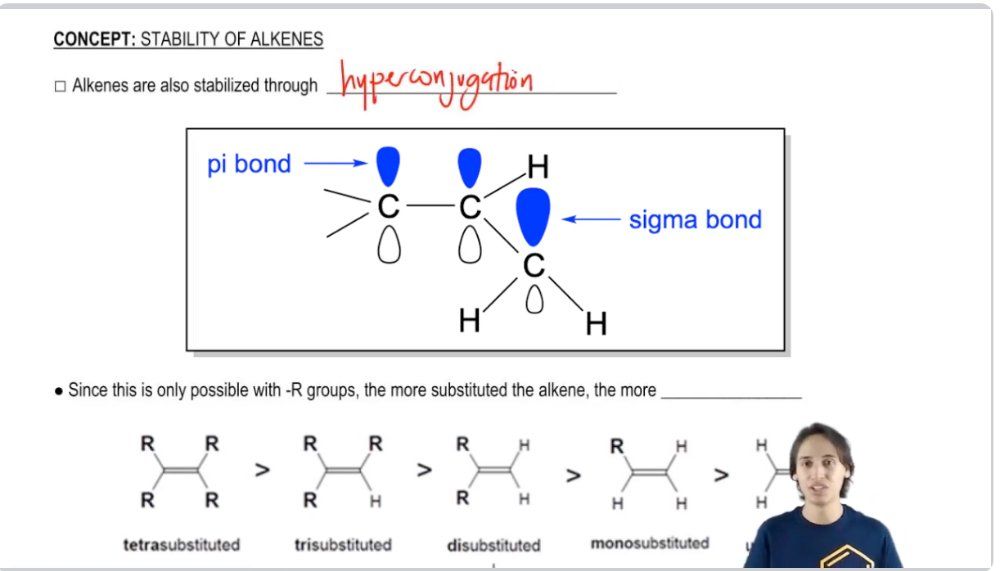
Consider the structural factors affecting stability: The stability of alkenes is influenced by factors such as the degree of substitution (more substituted alkenes are generally more stable) and steric hindrance. While the problem does not provide structural details, the heat of hydrogenation values already indicate the relative stabilities.
Conclude the comparison: Based on the heat of hydrogenation values, alkene A is more stable than alkene B because it has a lower heat of hydrogenation (29.8 kcal/mol vs. 31.4 kcal/mol).
Verified video answer for a similar problem:
This video solution was recommended by our tutors as helpful for the problem above
Video duration:
1m
Play a video:
0 Comments
Key Concepts
Here are the essential concepts you must grasp in order to answer the question correctly.
Heat of Hydrogenation
The heat of hydrogenation refers to the amount of energy released when an alkene is converted to an alkane through the addition of hydrogen. A lower heat of hydrogenation indicates that the alkene is more stable, as it requires less energy to break the double bond. This is because more stable alkenes have lower potential energy due to greater substitution or steric hindrance.
Alkene stability is influenced by the degree of substitution around the double bond. More substituted alkenes (those with more alkyl groups attached to the carbons of the double bond) are generally more stable due to hyperconjugation and the inductive effect. Therefore, when comparing heats of hydrogenation, the alkene with the lower heat value is the more stable one.
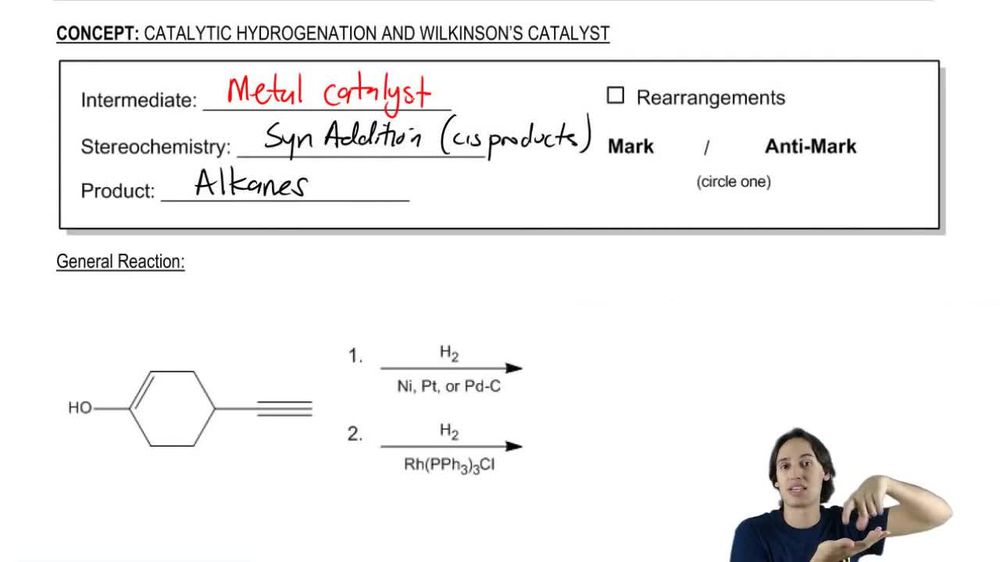
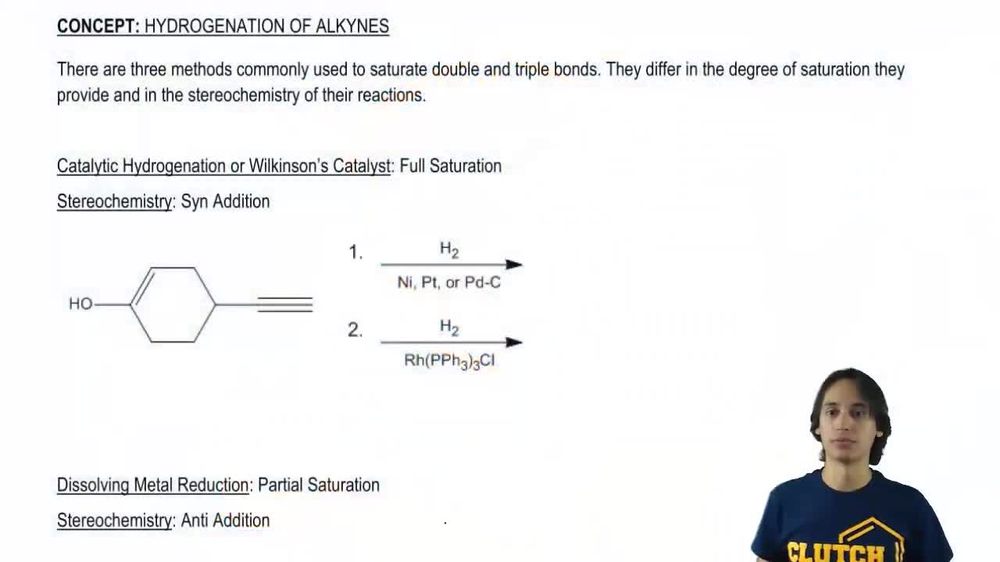
Catalytic hydrogenation is a chemical reaction that involves the addition of hydrogen to an alkene in the presence of a catalyst, typically a metal such as palladium, platinum, or nickel. This process converts the alkene into an alkane, effectively saturating the molecule. The efficiency and conditions of this reaction can provide insights into the stability of the starting alkenes based on the energy changes observed.

 1:07 minutes
 Verified step by step guidance
 00:48
00:48